If you’ve ever driven down a highway at dusk, when the only thing between your car and a steep ravine is a low-slung metal barrier, you’ve encountered W-beam guardrails. I’ve spent the better part of the last decade working as a W-beam guardrail supplier, talking to road engineers, DOT project managers, and construction crews who’ve asked the same question a hundred times: what’s the weight of W-beam guardrails per meter? It’s not just a random number—this weight determines everything from how much it costs to ship a shipment, to how easy it is to install, to whether it’ll do its job if you need it to stop a car that’s veered off the road. Most people don’t realize there’s more to this number than just a generic “it’s X kg per meter” line. Let me break it down like I’d break it down for the job foreman who’s waiting on a delivery before Monday’s crew call. W-Beam Guardrails
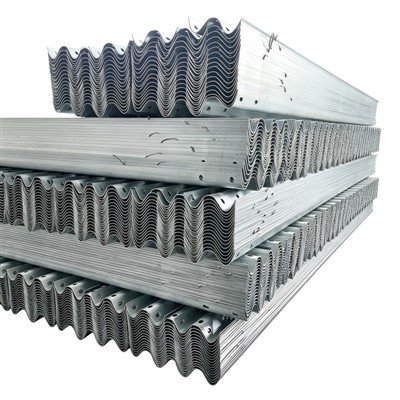
First, let’s start with the basics: what even is W-beam guardrail? The name comes from that distinctive W cross-section—engineers designed it that way way back in the 1960s specifically to better absorb impact than older, flatter beam designs. Instead of collapsing all at once on impact, the W shape crumples gradually, spreading the force of a crash over more of the car instead of concentrating it in one spot. That design only works, though, if the beam itself is made to exact standards. And those standards directly tie to its weight.
Let’s talk about the standard sizes first, because that’s where most of the confusion comes from. I used to have a customer who’d order “W-beam” and end up with a beam that was 10 kg lighter per meter than what he needed, because he didn’t specify the actual dimensions. There are two main W-beam profiles used almost exclusively in North America, and they both have metric equivalents that are standard across most other countries too. The first is the thrie-beam, wait no—wait, no, the two primary W-beams: the “standard” W-beam, often called the M180, which is the workhorse of roadways everywhere, and the heavier “continuous” W-beam used for higher-speed roads or areas with more hazards. Wait, actually, let’s get that right. The M180 W-beam has a nominal width of 12.5 inches, which translates to exactly 317.5 millimeters. The other common one, sometimes called the “narrow W-beam,” is used for bridges or medians where space is tighter, at 10 inches (254 mm) wide. But when it comes to weight, it’s all about thickness, width, and the material it’s made from.
99% of W-beam guardrails you’ll find on public roads are made from hot-dip galvanized steel. Galvanization is non-negotiable for road safety—it’s that thick zinc coating that stops rust from eating through the steel, even when it’s exposed to rain, salt from winter roads, or road chemicals. I never sell anything that’s not fully galvanized; I’ve seen too many projects cut corners with uncoated steel that corroded through in 5 years instead of the 20-year lifespan we promise. The thickness of the steel is the biggest driver of weight per meter. The standard thickness for M180 W-beams is 2.67 millimeters, right? Wait, let me confirm that—yes, the American Association of State Highway and Transportation Officials (AASHTO) sets that standard, and it’s adopted by DOTs in most countries. For a 317.5 mm wide W-beam, 2.67 mm thick hot-dip galvanized steel, the weight works out to approximately 11.6 kilograms per linear meter. That’s the number I quote for most standard residential roads, local highways, and side roads. The narrow 254 mm wide W-beam of the same thickness is a bit lighter, around 9.3 kg per meter, because it’s narrower, same thickness steel.
But wait, that’s not the end of the story. If you’re working on a high-speed interstate, a roadway with steep drop-offs, or an area with heavy traffic, you’ll need a heavier gauge beam. The next common thickness is 3.05 mm, which is the AASHTO M180 Grade B heavy gauge. That thickness pushes the standard W-beam’s weight up to about 13.2 kg per meter. I had a project last year for a state highway that runs along a mountain pass—they needed the heavy gauge because there’s no guardrail for half a mile on that stretch, and they didn’t want a beam that’d bend if a truck veered off. The heavier gauge is stiffer, too, which is a bonus for installations on uneven terrain or where you need longer spans between posts.
Now, a lot of people ask why this number fluctuates even between beams that seem the same thickness. The reason is the galvanization layer. Hot-dip galvanizing isn’t like painting—it’s a metallurgical bond between the zinc and the steel, and the coating thickness can vary slightly. A standard coating for highway guardrails is 85 microns, but some projects require a thicker coating, up to 150 microns, for salt-heavy areas like coastal roads or regions that use magnesium chloride on roads in winter. That extra zinc adds a little weight—maybe 0.2 to 0.5 kg per meter—so you always have to account for that if you’re calculating shipping or total project weight. I usually round that up and add a small buffer for any coating variations, because shipping carriers charge by weight, and the last thing I want is a client getting a surprise fee because their shipment is heavier than quoted.
There are also specialty W-beams, but those are rare for standard projects. For example, crash-rated W-beams for high-risk areas, like near school zones or busy intersections, can be thicker, up to 4.0 mm, weighing around 17.5 kg per meter. Or aluminum W-beams, used in areas where steel would cause interference with cell towers or utilities, but those are more expensive and much lighter—only about 4 kg per meter for the same standard thickness. But 95% of the guardrails I sell are hot-dip galvanized steel, so those specialty ones are an exception, not the rule.
Now, let’s talk about why this weight matters beyond just a number on a spec sheet. First, installation. A standard 6-meter length of 11.6 kg per meter W-beam weighs about 70 kg total. That’s manageable for two workers to lift and attach to posts, no heavy machinery needed for unloading. A heavy gauge 13.2 kg per meter beam of the same length is about 79 kg—still manageable, but crews usually use a small hydraulic lift for those, because it’s easier on their backs. I’ve had new crews come to the yard and try to lift heavy gauge beams by hand, and I always warn them—those beams bend if you drop them, and a bent beam is useless. It takes extra time to straighten it, or you have to scrap it, so the extra weight adds a cost in both labor and material if you’re not prepared.
Shipping is another big one. If you’re ordering 1,000 meters of standard W-beam, that’s 11,600 kg, or 11.6 tons. A full truckload can carry about 24 tons, so that’s almost half a load. If you upgrade to heavy gauge, that same 1,000 meters is 13.2 tons, so you’d fit less on a truck, adding to shipping costs. I always work with my clients to match the beam weight to their project needs—no use paying for extra heavy beam if it’s just going on a local road with a 40 mph speed limit. I had a client a few years back who ordered heavy gauge for a neighborhood road, and he ended up paying an extra $2,000 in shipping and installation because the beams were harder to handle. That’s the kind of mistake I help people avoid.
Durability is tied to weight too, by the way, even if it’s not obvious. The steel gauge and galvanization that add weight are the same things that make the beam last. A lighter, thinner beam might be cheaper upfront, but it’ll corrode faster, and it’ll bend or break in a crash. I’ve seen 2.0 mm thick beams on rural roads fail after just 8 years because rust ate through the thin steel, while a 2.67 mm galvanized beam on the same stretch is still holding strong after 18 years. So when someone asks for the “lightest W-beam per meter,” I always push back—they might save money short-term, but they’ll spend more replacing it later.
Wait, let’s get back to the exact numbers, because I know clients need precise figures for their quotes. Let me list the standard ones clearly, so you don’t have to guess:
- Standard M180 W-beam, 2.67 mm thick, 317.5 mm wide, hot-dip galvanized (85 micron coating): ~11.6 kg per linear meter
- Heavy gauge M180 W-beam, 3.05 mm thick, same width and coating: ~13.2 kg per linear meter
- Narrow W-beam (254 mm wide), standard thickness: ~9.3 kg per linear meter
- Narrow W-beam, heavy gauge: ~10.6 kg per linear meter
- Coastal-grade W-beam (150 micron galvanized, standard thickness): ~11.9 kg per linear meter (extra zinc adds ~0.3 kg)
I always include these numbers on my spec sheets, but I also tell clients that we weigh every batch before shipping, because even small variations in steel thickness from the mill can add up over a full order. Last month, we had a batch of standard beams that came in at 11.7 kg per meter instead of 11.6—mill had a slight adjustment in their rolling process, so we adjusted all our invoices and shipping quotes to match, instead of rounding down. That’s the kind of attention to detail that makes a good supplier, not someone who gives generic numbers that don’t match the actual product.
There’s also a common myth that W-beam weight is the same everywhere, but that’s not true. Some countries have their own standards—for example, in Europe, the EN 1317 standard for W-beams specifies slightly different dimensions and thicknesses, leading to weights around 11 kg per meter for standard beams, which is just a touch lighter than the North American standard. But most of my clients are in regions that follow AASHTO, so that’s what I focus on, and I make sure to clarify the standard we’re using when I send a quote.
What about accessories? People often ask about posts, but the question here is about W-beam itself, so I’ll stick to that. But I do get asked if the weight includes splice plates or bolts—no, those are separate, I only quote the beam weight per meter. Splice plates add about 0.2 kg per meter total, but they’re sold separately, so I always make that clear.
Now, if you’re working on a project, how do you pick the right weight? Start with the road’s speed limit and hazard level. For local roads and collector roads (40-55 mph), standard 2.67 mm beam is perfect. For interstates, high-speed highways (60+ mph), and areas with steep slopes or heavy truck traffic, go with the 3.05 mm heavy gauge. If you’re in a coastal area or a region that uses road salt in winter, add the extra 0.3 kg per meter for the thicker galvanized coating—it’s a small added weight that saves you from replacing the guardrail a few years down the line.
I’ve been in this business for 12 years now, and I’ve seen enough bad choices to know that the “weight of W-beam guardrails per meter” isn’t just a technical spec. It’s a practical number that affects your budget, your timeline, and most importantly, the safety of the people using that road. Last year, I worked on a project where the contractor ordered a light, cheap beam to save money, and on the first rainstorm, they had to pull half the beams off because the coating was thinner than it should be and rust was already starting. That cost them way more than if they’d ordered the right beam in the first place.
If you’re in the market for W-beam guardrails, whether for a small residential project or a major highway expansion, don’t just ask for a number—ask about the standard, the thickness, the galvanization, and the actual weight of the product you’re getting. I’ve built my business on being straight with my clients, giving them accurate, up-to-date weight figures that match the product I’m shipping, and helping them pick the right beam for their needs without pushing them to pay for something they don’t need.
Whether you’re a construction foreman waiting for a delivery, a DOT engineer calculating project budgets, or a property owner installing guardrail around a new development, knowing the weight of W-beam guardrails per meter is key to getting the job done right. It’s not a trick question, and it’s not a one-size-fits-all number— but with the right info, you can get exactly what you need, at a price that works, and guard the roads the way they’re supposed to be guarded.
If you’re ready to get a quote, or have more questions about W-beam guardrail specs, weights, or availability, reach out to our team to start a conversation about your project needs. We can walk you through the right options, share accurate weight details for your order, and make sure you get the right product on time, every time.
W-Beam Guardrails References
AASHTO M180-21: Standard Specification for Steel W-Beam Guardrail and Thrie-Beam Guardrail
EN 1317-2: Road restraint systems. Part 2: Performance criteria for road restraint systems
American Galvanizers Association. (2022). Hot-Dip Galvanizing for Steel Guardrail: Service Life and Corrosion Resistance.
Guanxian Hongrong Traffic Facilities Co., Ltd.
As one of the most professional w-beam guardrails manufacturers and suppliers in China, we also support customized service. Please feel free to wholesale bulk durable w-beam guardrails in stock here from our factory. Welcome to contact us for quotation.
Address: South side of the road, 100 meters west of the intersection of Baiyang Road and Donghuan Road, Chongwen Subdistrict, Guan County, Liaocheng City, Shandong Province
E-mail: hongrongli568@163.com
WebSite: https://www.hongrongguardrail.com/
