If you’ve ever watched a warehouse automated guided vehicle (AGV) move smoothly along its designated route, or seen a conveyor belt adjust its speed to match the flow of packages, you’ve seen a DC gear motor in action. What many people don’t always notice, though, is the quiet, behind-the-scenes system that keeps that motor running exactly when and how it needs to: closed-loop control. As a supplier of DC gear motors, I get asked a lot about why this control method matters more than open-loop, and how it makes our motors reliable for everything from factory automation to small electric vehicles. Let’s break it down simply, no confusing jargon, because I know most of our customers are engineers, small business owners, and team leads who need solutions that work, not just theories. DC Gear Motor

First, let’s start with the basics: what a DC gear motor is, and why we use gears in the first place. A DC motor runs on direct current, which gives it instant torque—great for starting heavy loads, but at high speeds. Gears slow that speed down and multiply torque, turning a fast, weak motor into a slower, stronger one perfect for things like lifting gates, rotating turntables, or moving robots. But here’s the problem with just a motor and gears, no control: if the load changes, or the power supply dips a little, the motor’s speed will change too. For example, if you’re using a motor to pull a shelf on an AGV across a warehouse floor, a small spot of uneven concrete might make the motor work harder, and without adjustment, the AGV slows down even if you told it to go 1 meter per second. Or if the power from the battery drops as it drains, the same motor will run slower over time. That’s where open-loop control stops working, and closed-loop control steps in.
Open-loop control is the simpler, older system: you set a speed or position, send a fixed signal to the motor, and hope it hits that target. No feedback, no checks. It’s cheap, and works for simple jobs like a fan or a toy car, but for most industrial or commercial applications that rely on consistent performance, it’s too unreliable. Closed-loop control fixes that by adding two key parts: a sensor that measures the motor’s actual output, and a controller that compares that measurement to the target, then adjusts the motor’s power to close the gap between what’s set and what’s happening. Think of it like driving a car: you set a speed on cruise control (that’s your target), the speedometer (the sensor) tells you how fast you’re going, and the engine controller presses the gas or brakes if you go too slow or too fast. That’s exactly how a closed-loop DC gear motor works, just on a smaller, more precise scale.
Let’s get specific about the components here, because this is what makes our DC gear motors stand out. First, the sensor: the most common one for DC gear motors is an encoder, which counts the number of revolutions the motor shaft makes (speed feedback) or how far it’s rotated (position feedback). There are incremental encoders, which give pulses as the shaft turns, good for speed control, and absolute encoders, which tell the exact position even if power cuts out, perfect for things like a robotic arm that needs to know where it is when it turns back on. Some lower-speed applications might use a potentiometer, which measures voltage to calculate position, but encoders are more accurate for most of the jobs we handle. Then there’s the controller, usually a microcontroller or a dedicated motor driver card. This controller runs a simple, continuous loop: every millisecond or so, it reads the encoder’s signal, compares it to the set speed or position, and adjusts the voltage or current to the motor to fix any difference. If the actual speed is 0.1 m/s slower than the target, it sends a little more power. If it’s too fast, it sends less. That’s the “closed loop” part—endlessly looping between measuring, comparing, adjusting, so the motor stays right where it needs to be.
Now, why does this matter for our DC gear motors specifically? Let’s take a recent example from a customer who makes automatic door operators for retail stores. They used to buy motors without closed-loop control, and they’d get 10% of units failing after 6 months because the door would either open too slow and catch a customer, or slam open too fast and damage the track. Switching to our DC gear motors with closed-loop control fixed that. The encoder on the motor tells the controller when the door is halfway open, 90% open, fully open—if it lags, the controller ramps up the torque to make up for it; if it speeds up, it reduces power. Now their failure rate is under 1%, and they’ve doubled their order volume with us. That’s not a fluke—closed-loop control eliminates the “guesswork” that comes with open-loop, especially with variable loads.
Another example: a small business that builds mobile solar panel cleaners for parking lots. Their cleaners need to move at a consistent speed across uneven pavement, and maintain a set position so the brush covers every inch of the panel. Without closed-loop control, the motor would slip on a rough spot, and the cleaner would miss a section, leading to dirty panels and unhappy customers. With our closed-loop DC gear motors, the encoder tracks every inch the motor moves, so even when a wheel slips, the controller adjusts the other motor to keep the cleaner on path, and the brush stays at the right height to clean effectively. The business told us their customer satisfaction went from 85% to 98% after switching motors, and they’ve recommended us to two other solar cleaning companies.
But closed-loop control isn’t just about speed—there’s also position control, which is critical for things like conveyor systems that need to stop exactly at a certain spot, or robotic arms that need to pick up small parts. For position control, the closed loop adds a set target position (say, 90 degrees rotation for a conveyor stop), and the encoder measures the actual rotation. If the motor is 5 degrees away from the target, the controller adjusts the power until it’s exactly in place. That’s how manufacturers can get conveyor belts to drop packages exactly at a sorting station, or how small assembly robots can put screws in the right hole every time. Our DC gear motors with absolute encoders are especially popular for this, because they don’t lose position if power is cut—when a facility resets after a blackout, the motor knows exactly where it left off, no re-calibration needed.
I know what some of you are thinking: “Aren’t closed-loop motors more expensive?” Yes, they’re a bit pricier upfront than open-loop, but the long-term benefits add up fast. Less downtime because of motor failures, fewer product defects from inconsistent movement, lower maintenance because the controller prevents the motor from overworking or running too hard. For most businesses, the payoff is within a year, sometimes even less, especially when you’re dealing with applications where reliability isn’t optional. That’s why we design all our standard DC gear motors to be compatible with closed-loop systems, so you don’t have to source extra parts or do complicated modifications to integrate them into your setup. We also offer custom encoders and controllers, so if you have a specific need—like a motor for a medical device that needs ultra-precise position control—we can work with you to build exactly what you need.
Something I want to clarify, because it’s a common mix-up: closed-loop control isn’t just for high-power industrial motors. We sell small DC gear motors with closed-loop control for things like automatic window blinds, library book sorting systems, and even small electric scooters. For the blinds, the motor needs to stop exactly at the top and bottom of the window, no overshooting to avoid damaging the fabric. For book sorters, they need to move books at a consistent speed so the scanner can read the barcode every time. That’s the beauty of closed-loop control: it works at any scale, as long as you need consistent, reliable movement.
Now, a quick note on how we test our motors before they leave our facility. Every closed-loop DC gear motor we ship goes through a 24-hour run test, where we simulate varying loads to make sure the controller is adjusting correctly. We measure speed consistency, position accuracy, and heat output—because a motor that’s running too hard will wear out fast. We also test for power fluctuations, to make sure the controller can compensate if the battery voltage drops, like when a scooter’s battery gets low, or a warehouse’s power system dips temporarily. That’s why our customers tell us our motors last 2-3 times longer than the ones they bought from other suppliers—we don’t just sell a motor and a gear; we deliver a complete closed-loop system that’s been proven to work in real-world conditions.
I’ve talked to a lot of customers who tried to DIY closed-loop control, and it almost always ends up with frustration. They buy a cheap motor, add a random encoder, and try to program a controller themselves, only to find that the speed is inconsistent or the position is off. Our engineers have been designing DC gear motors for over a decade, and they know how to integrate the encoder, motor, and controller so they work seamlessly. We handle all the calibration, so when you take the motor out of the box, you just connect it to your power source and your system controller, and it works as it should. No guesswork, no extra programming needed for most standard applications.
If you’re reading this, chances are you’re in the market for a DC gear motor, and you’re wondering if closed-loop control is right for your project. Ask yourself: do I need consistent speed? Does my application rely on exact position? Will the motor be working with variable loads, like uneven surfaces or changing weights? If the answer is yes to any of those, closed-loop control is almost always the better choice. And if you’re not sure, our team is here to help—we can ask you a few questions about your application, and recommend the right motor and control system for your needs.
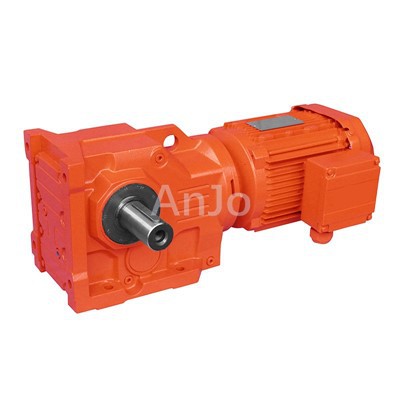
We don’t sell generic motors; we sell solutions that solve specific problems. Whether you’re building a new AGV, a conveyor system, a solar cleaner, or any other application that needs reliable DC motor performance, our closed-loop DC gear motors are built to handle the job. To get started, you can reach out to our team directly to discuss your requirements—we’ll provide a custom quote, answer any questions you have about control systems, and make sure you get the right motor for your project. Don’t settle for motors that will let you down when you need them most; invest in a closed-loop DC gear motor from a supplier that knows motors inside and out, and has a track record of helping businesses succeed.
DC Brush Planetary Gear Motor References
- Bolton, W. (2015). Mechatronics: Principles and Applications. Pearson Education Limited.
- Harrah, L. (2020). Motor Control fundamentals: Closed-Loop vs. Open-Loop Operation. IEEE Industry Applications Magazine.
- Kavanagh, P. (2018). DC Gear Motors for Industrial Automation: Performance and Control. Industrial Automation Magazine.
Hangzhou ANG Drive Co., Ltd.
As one of the most professional dc gear motor manufacturers and suppliers in China, we’re featured by quality products and good service. Please rest assured to wholesale custom made dc gear motor from our factory. Good service and quality products are available.
Address: No.185, Jincheng Rd., Hangzhou 311202, China
E-mail: export2@angdrive.com
WebSite: https://www.anjodrive.com/
