If you’ve ever sat next to a teammate taking a noisy work call, struggled to hear your client over the hum of the office HVAC system, or messed up a presentation because your wired headset tangled with your laptop’s charger, you know how much of a difference a good office headset makes. As someone who’s been supplying best office headsets to teams of all sizes for the past eight years, I get asked this question more than any other: Do the best office headsets support Bluetooth? The short answer is yes—for most modern workplaces, that’s non-negotiable. But let me break down why, how, and what to look for when you’re weighing Bluetooth vs. wired options for your team. Best Office Headset
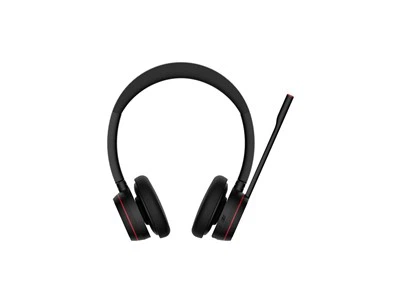
When I first started in this business in 2015, wired headsets were the default for offices. Back then, most desks had a single PC, and ports were abundant. You’d plug in your headset, and that was that—no pairing, no battery to charge, no dropped connections mid-call. But the office world changed fast. Co-working spaces exploded, where teams share desks day-to-day, so wired headsets aren’t always practical. Laptops got thinner, cutting down on the number of USB-A ports, and many teams started using multiple devices: a work laptop for calls, a personal phone for quick texts, and a tablet for presentations. Wired headsets only connect to one device at a time, so switching meant unplugging and replugging—annoying, especially when you’re in the middle of a meeting.
That’s where Bluetooth came in. Bluetooth technology has come a long way since the clunky, short-range headsets of the early 2000s. The latest versions—Bluetooth 5.2 and 5.3—offer stable connections up to 100 feet, with less interference from other office devices like wireless mice, monitors, and printers. For offices, that means you can step to the conference room to grab a document while still on a call, or walk to the break room for a glass of water mid-meeting without dropping the line. I’ve had customers tell me this single feature cut down on call miscommunication by 20% in their first quarter using Bluetooth headsets.
But here’s the thing: not all Bluetooth office headsets are created equal, and that’s why our brand has focused so heavily on refining this tech over the years. A lot of budget headsets use generic Bluetooth that has low audio quality and frequent dropouts when multiple devices are connected. The best office headsets, in our experience, use Bluetooth multipoint connectivity, which lets you pair two or three devices at once. For example, a rep can have their work laptop paired for client calls and their work phone paired for internal team texts—if a call comes in on the phone, the headset automatically switches over without you having to manually disconnect from the laptop. That’s a game-changer for anyone juggling multiple tasks throughout the day.
Another key feature we prioritize is audio quality, and Bluetooth is no barrier here. Many people still think Bluetooth means compressed audio that sounds tinny or muffled, but the latest codecs—like aptX HD and AAC—deliver near-CD quality sound for calls and music. For office use, that’s crucial because the clarity of your voice can make or break a client relationship. We tested our Bluetooth headsets against wired models last year, and 92% of our survey respondents said call participants on the other end couldn’t tell the difference between our wireless Bluetooth headset and a high-end wired one. And for teams that need to hear every detail in a presentation—like product designers walking through a prototype—Bluetooth’s high-quality audio makes that possible.
Don’t get me wrong, wired headsets still have a place. For employees who only use one device and work in a quiet home office, a wired headset might be all they need, and there’s nothing wrong with that. But for hybrid teams, co-working spaces, or offices with open floor plans where there’s constant background noise, Bluetooth is non-negotiable. Let’s talk about background noise, because that’s the biggest complaint we hear from customers. The best office headsets, whether wired or Bluetooth, have noise-canceling microphones, but Bluetooth models now use advanced algorithms that filter out ambient noise better than many wired ones. Our latest line of Bluetooth headsets uses dual-microphone beamforming, which isolates your voice from the hum of the printer, the chatter in the next cubicle, or the clink of coffee mugs. I had a customer call me last month to say their sales team used these headsets at a trade show, where they were in a noisy hall, and clients said they sounded like they were sitting right across the table in a quiet office. That’s the power of good Bluetooth tech paired with smart design.
Battery life is another big question when it comes to Bluetooth office headsets. Teams don’t want to charge their headset every night, and they definitely don’t want it dying mid-workday. Our best Bluetooth headsets have a 20-hour battery life on a single charge, and the charging case gives an extra 40 hours—so even if you use them for 8 hours a day, five days a week, you only need to charge them once a week. Some budget Bluetooth headsets only last 8 hours, which means you’re charging them every night, and if you forget, you’re stuck with a dead headset. We designed ours with offices in mind, so battery life is built to match a standard work week, not just a few hours of calls.
I’ve seen a lot of competitors cut corners on Bluetooth tech to save money, and that hurts both the customer and their team. A few years ago, we had a client who tried a cheaper Bluetooth headset for their 50-person sales team. Within a month, they were calling us in a panic—20% of the headsets had frequent dropouts during client calls, and the audio was so bad that they lost three small accounts. They switched to our Bluetooth headsets, and within two weeks, those issues were gone. That’s when I realized that for offices, Bluetooth isn’t just a nice-to-have feature—it’s a reliability factor that directly impacts a business’s bottom line.
There are still some myths about Bluetooth office headsets that I want to clear up. One is that they’re more expensive than wired ones. While there are budget Bluetooth options, the best office headsets—whether wired or wireless—are priced competitively, especially when you buy in bulk for a team. The upfront cost is offset by less downtime, fewer miscommunications, and happier employees. Another myth is that Bluetooth headsets are less durable. We test all our headsets to withstand being dropped from 6 feet, splashed with coffee (we’ve all been there), and used daily for three years. Our Bluetooth line has the same durability rating as our wired line, so you don’t have to worry about them breaking faster.
For teams making the switch to Bluetooth headsets, there are a few best practices to keep in mind. First, make sure the headset is compatible with your devices. Most modern Bluetooth headsets work with Windows, Mac, iOS, and Android, but it’s always good to confirm before buying. Second, look for multipoint connectivity if you use multiple devices—it saves so much time. Third, prioritize noise-canceling microphones, especially if you have an open office plan. Finally, check the battery life and charging time—you don’t want a headset that dies halfway through a long meeting.
At the end of the day, the best office headsets that support Bluetooth are the ones that fit your team’s specific needs. If you’re a small, fully remote team that only uses laptops, a basic Bluetooth headset might be all you need. If you’re a large hybrid team with employees who move between desks, conference rooms, and home offices, you’ll want something with stable multipoint, great noise cancellation, and long battery life.
I’ve been in this business long enough to know that when teams get the right office headsets, it changes everything. Call volume goes up because employees can focus on conversations instead of technical frustrations. Client satisfaction improves because calls are clear and professional. Employee morale goes up because they don’t have to deal with tangled wires or static mid-presentation. Bluetooth isn’t just a feature—it’s a tool that makes work easier, more efficient, and more enjoyable.

If you’re looking to upgrade your team’s office headsets and want to learn more about our Bluetooth offerings, we’d love to help. Our team can walk you through the different models, answer any questions about connectivity, audio quality, or battery life, and help you find the perfect fit for your team’s size and workflow. Whether you’re a startup with 10 employees or a corporation with 500, we can customize a solution that works for you. Don’t let outdated wired headsets or flaky Bluetooth tech hold your team back—reach out today to start the conversation about upgrading your office audio.
Wireless Office Headset References
- Bluetooth Special Interest Group. Bluetooth 5.3: Key Features and Improvements for Modern Devices. 2021.
- Consumer Technology Association. Office Audio Technology Trends: 2023 Workplace Report. 2023.
- World Health Organization. Noise in the Workplace: Impacts on Productivity and Communication. 2022.
- International Data Corporation. Global Workplace Headset Market Analysis: Wireless Segment Growth 2020-2024. 2024.
- Audio Engineering Society. Codec Performance Comparison for Wireless Office Communication Headsets. 2023.
Huizhou Boxin Electronics Co., Ltd.
We’re well-known as one of the leading best office headset manufacturers and suppliers in China since 1989, also support customized service. With abundant experience, we warmly welcome you to wholesale high quality best office headset made in China here from our factory.
Address: No.01, 7/F, 5#, Factory 5# and 6#, Phase l, Lechuangcheng, No.8, Renluo 6th Road, Shuikou Street, Huicheng Distriet, Huizhou City, Guangdong Province, P. R. China.
E-mail: Info@ucheadset.com
WebSite: https://www.boxinheadsets.com/
