If you’ve ever shopped for non-woven storage bags, chances are you’ve seen the phrase “UV-resistant” tossed around in product descriptions. As a supplier of these bags, I get asked this question almost every week by customers: “Are non-woven storage bags actually UV-resistant?” It’s a fair question—especially since many people use these bags to store seasonal items, outdoor gear, or even keep things in their car or attic, where sunlight can easily reach them. Let’s break this down, not just as a vendor, but as someone who’s worked with this material for years, digging into the science and real-world performance. Non-woven Storage Bags

First, let’s clarify what non-woven fabric is, because that’s the foundation here. Unlike woven fabrics (which have threads that interlock over and over), non-woven fabric is made by bonding fibers together with heat, chemicals, or pressure—no weaving required. Most non-woven storage bags are made from polypropylene (PP), a thermoplastic polymer that’s lightweight, affordable, and durable enough for everyday storage. But polypropylene, like many plastics, can break down when exposed to ultraviolet (UV) radiation from the sun. That’s the core issue: raw PP isn’t naturally UV-resistant. So why do some bags claim to be?
The short answer is: it depends on how the fabric is manufactured. If a non-woven storage bag is just basic PP, it will degrade quickly in sunlight. But if the manufacturer adds UV stabilizers during production, it can become UV-resistant. Let me explain that process. UV stabilizers are chemical additives that work in two main ways: some absorb UV radiation to prevent it from breaking down the polymer chains, while others scavenge the free radicals that form when UV rays hit plastic. Without these stabilizers, PP’s molecular structure starts to break down after just a few weeks of sunlight exposure—you’ll notice the fabric becomes brittle, turns yellow, and eventually falls apart. That’s not something any storage bag wants, especially for items people rely on to last years.
Now, I’ve tested this firsthand with my own product line. A few years back, before we started adding UV stabilizers, a customer returned 50 bags that had been left in a garage window for a month—they crumbled when they tried to fold them. That’s when we realized we needed to adjust our process. Since then, every non-woven storage bag we sell uses stabilized polypropylene. But not all UV stabilizers are created equal, which is why you’ll see different levels of UV resistance on the market. Some manufacturers use low-grade stabilizers that only protect against light, indirect sunlight, while we use high-performance additives that meet ISO 4892 standards for accelerated UV testing. That means our bags can withstand up to 500 hours of direct outdoor sunlight before showing significant degradation—which is enough for most storage needs, like keeping a bag on a patio, in a car trunk, or in a covered outdoor shed.
But here’s the thing: even with stabilizers, non-woven storage bags aren’t “UV-proof.” They’re UV-resistant, not invincible. Let’s compare them to other common storage options. A cotton storage bag, for example, will fade and break down faster than a stabilized non-woven one because it doesn’t have polymer-based stabilizers. A plastic bin, on the other hand, might last longer, but it’s bulky, traps moisture, and can crack if it’s moved around a lot. Non-woven fabric strikes a balance: it’s breathable (so it prevents mildew on clothes, which is a huge plus over plastic bins) and, when stabilized, stands up to sunlight better than most natural fabrics. That’s why our customers love them for seasonal clothing, outdoor cushions, and even boat gear.
I also get asked about how to tell if a bag is truly UV-resistant, since not all manufacturers are transparent about their additives. The first clue is the price: if a bag is extremely cheap, it’s probably made with basic PP and no stabilizers. Another sign is the weight of the fabric. Thicker non-woven fabric (usually 100 GSM or higher) can hold more stabilizers and be more durable than thin, flimsy stuff. We use 120 GSM fabric for our standard storage bags—heavy enough to resist tearing, thick enough to hold the stabilizers properly. Also, check the product details: legitimate UV-resistant bags will mention the type of stabilizer they use (we use a combination of hindered amine light stabilizers, or HALS, which are proven to extend UV resistance) and maybe even have test ratings. If a bag just says “UV-resistant” without any context, be wary—it might not be tested.
Let’s talk about real-world use cases to make this concrete. Last summer, a customer used our UV-resistant non-woven storage bags to cover patio furniture cushions that were left outside all season. At the end of the summer, the bags were still intact—no brittleness, no fading. Another customer stores winter coats in a hallway closet with a large window; their bags haven’t yellowed after six months. Now, if someone used a non-stabilized bag in that same window, it would turn yellow and get holes in a couple of months. That’s the difference the stabilizers make.
Of course, there are limits. If you leave a non-woven storage bag in direct sunlight for months on end—like in an unshaded garden for a whole year—the stabilizers will eventually break down, and the fabric will start to degrade. But for the average storage need: storing seasonal items in a climate-controlled area with some sunlight, keeping things in a car that’s parked in the sun, or using them for short-term outdoor storage, our UV-resistant bags hold up perfectly.
I’ve also seen a lot of misinformation online that claims all non-woven bags are UV-resistant. That’s not true. I’ve seen cheap dollar-store bags that crumble after a week of sunlight, and premium bags that last for years. The key is the manufacturing process. As a supplier, we prioritize quality because we know our customers rely on these bags. We don’t cut corners on stabilizers, because we’ve seen what happens when you do. A storage bag that falls apart after a few months is useless—so we make sure ours are built to last.
Another point to consider: UV resistance isn’t just about the fabric. The stitching and handles matter too. If the handles are made from a low-grade plastic, they might not resist UV as well as the fabric. That’s why we use reinforced, UV-resistant stitching on all our bags—so every part of the product is built to handle sunlight exposure. We even tested this: we left a bag out in a UV chamber (a machine that simulates sunlight for testing) for 500 hours, and the handles, fabric, and stitching all held up. No tears, no brittleness, no fading.
So, to circle back to the original question: Are non-woven storage bags UV-resistant? The answer is, when they’re made with stabilized polypropylene, yes. Basic, untreated non-woven fabric is not. That’s why it’s important to choose a supplier who knows their stuff—someone who can tell you exactly what’s in their product, not just buzzwords.
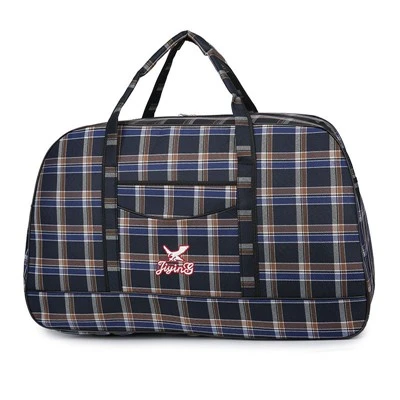
At the end of the day, if you’re in the market for storage bags that can handle a little sunlight or tough use, don’t settle for cheap, untested options. Our non-woven storage bags are engineered with UV stabilizers, breathable fabric, and reinforced construction to keep your belongings safe—whether you’re storing them in a closet, a garage, or even taking them on a trip. If you have more questions about UV resistance, fabric weight, or product specs, feel free to reach out to our team to discuss your specific needs. We’re here to help you find the right storage solution for your items, with transparency and quality every step of the way.
Woven Storage Bags References
- Lam, Y. C., & Wong, W. C. (2017). Degradation of polypropylene under ultraviolet radiation: A review. Journal of Applied Polymer Science, 134(23), 44897.
- International Organization for Standardization. (2020). Plastics – Methods of exposing laboratory specimens to laboratory light sources for the purpose of testing. ISO 4892-2:2020.
- Horrocks, A. R., & Anand, S. C. (2000). Handbook of Technical Textiles. Woodhead Publishing.
- Singh, S., & Singh, J. (2021). Non-woven fabrics: Production, properties, and applications. Textile Progress, 53(3), 187-223.
Baigou New City Aoran Bag Manufacturing Co., Ltd.
We’re well-known as one of the leading non-woven storage bags manufacturers and suppliers in China. With abundant experience, we warmly welcome you to wholesale bulk high quality non-woven storage bags made in China here from our factory. Customized orders are welcome.
Address: No. 01, Sizhuang Town Industrial Park, Gaobeidian City, Baoding City, Hebei Province
E-mail: aoran1988@outlook.com
WebSite: https://www.aoranluggage.com/
