If you’ve ever worked in automotive engineering or tried to figure out why newer EVs feel lighter than their gas-powered predecessors, you’ve probably stumbled on the term “flexible flat cables” (FFCs) and wondered how they stack up against the traditional wire harnesses we’ve used for decades. As a supplier that’s spent years troubleshooting these parts for car makers, I get so many questions about weight—because let’s be real, every gram matters when you’re optimizing range, handling, and even fuel efficiency. Today, I’m breaking this down like I would with a shop floor team, no jargon, just straight facts from what we see every day. Automotive Flexible Flat Cable

First, let’s get one thing straight: traditional automotive wire harnesses are bulky. I’ve seen a harness for a mid-size gas sedan that’s upwards of 150 wires, each 18-gauge or thicker, wrapped in plastic tubing, zip-tied to frame rails, and stuffed behind dashboards. Those wires are round, so they leave gaps—wasted space that adds extra plastic and metal to hold everything in place. FFCs? They’re flat, made of thin copper traces laminated between polyimide film, and come in single or multi-conductor strips that can bend around corners neatly. Now, for the weight comparison, let’s use real examples we work with, not hypothetical numbers.
Take a wiring set for a car’s center console: that’s where the infotainment screen, climate controls, and USB ports live. A traditional harness here has about 22 individual wires, each 20-gauge, plus plastic wrap, connectors, and the slack needed to route around the steering column. We weighed a sample last quarter: it came in at 187 grams. The FFC we supply for the same spot? 112 grams. That’s a 75-gram difference, just for one small section. Scale that up to a full vehicle harness vs. full FFC setup. For a compact EV, the total harness weight is usually around 12-15 kg, and the FFC equivalent? We see 7-9 kg. A 40% weight cut, right there.
Wait, why is that gap bigger for full vehicles than single sections? Because harnesses have so much redundant material. Every round wire needs insulation thickness to stand up to vibration and heat, but FFCs use thinner polyimide that’s rated for the same 150°C engine bay or under-dash temps—no extra thickness needed. Also, harnesses have a lot of “slack”: engineers add 2-3 inches of extra wire every few feet so installers can route it easily, but that’s just more copper and plastic sitting in the car for no reason. FFCs are cut to exact length during manufacturing, so there’s zero wasted slack. That’s why for complex systems like a car’s ADAS (advanced driver-assistance systems) wiring, where you have 10+ sensor connections, the FFC saves even more weight: ADAS harnesses often hit 2.8 kg, while our FFC for the same sensors is 1.6 kg.
But hold on—before you think FFCs are always lighter, there’s a catch for high-current applications. If you’re running a thick wire for a car’s electric motor or high-voltage battery, FFCs don’t make sense there. A single 4-gauge round wire for a battery terminal is way simpler than building a multi-conductor FFC with thick copper traces to carry 300+ amps. In those cases, harnesses will be comparable or even lighter. But for low to medium current parts—infotainment, door locks, sensor arrays, lighting—FFCs dominate the weight game. We’ve had customers swap a door harness (which has 14 round wires for windows, mirrors, lights) to FFC, and that dropped the door wiring weight from 32 grams to 19 grams. That’s huge when you’re adding four doors to a car—76 grams saved, which is like carrying a extra can of soda less.
Another thing I see a lot: people mix up FFCs with flexible printed circuits (FPCs), but FPCs are for tiny, high-density stuff like phone screens, while FFCs are more for automotive bulk wiring. Our team has tested both, but for automotive, FFCs give the best weight-to-reliability ratio. We recently worked with a Tesla Model 3 upgrade team that was trying to cut 100 kg total to boost range. They swapped all the under-dash and door wiring to FFCs, saved 12 kg right there, and didn’t have to rework any other systems. That’s 1% more range, just from switching cable types.
Wait, let’s talk about real-world use cases, not just lab numbers. A lot of mechanics will tell you older cars feel heavier, and it’s not just the engine. The 2010 Toyota Camry had a full harness weight of 14.2 kg; the 2024 Camry Hybrid uses a mix of harnesses and FFCs, total wiring weight 8.1 kg. That’s almost half. Why? Because the 2010 harness had 186 individual wires, each with 0.5mm insulation, plus 12 meters of total slack. The 2024 setup has 122 FFC traces, each 0.2mm thick, and only 1.2 meters of total slack. Less material, same function.
Now, why does this weight matter so much now? EV range anxiety is still a big deal, and every kg saved translates to about 0.5 km of extra range for a typical compact EV. That means a 10 kg FFC swap adds 5 km—enough to get someone through a daily commute without worrying about charging. Also, for performance cars, less weight means better handling: sports car manufacturers are using FFCs in the interior and even the engine bay to cut unsprung weight, which improves steering response.
But I’ll be honest: there’s a common misconception that FFCs are too fragile for automotive use. We’ve tested our FFCs in vibration chambers at 20g (that’s twice the force of a hard braking stop), temperature extremes from -40°C to 180°C, and they hold up way better than harnesses in high-vibration areas like wheel wells. The flat design means they don’t fatigue from bending, which is a big problem with round wires that snap after thousands of bends. That durability means you don’t need extra protective plastic tubing, which adds even more weight back to harnesses.
Let’s get back to numbers to make this concrete. I pulled data from our 2023 automotive product testing logs:
- Small section (center console): Harness = 187g, FFC = 112g → 40% lighter
- Door wiring (4 doors): Harness = 128g, FFC = 76g → 41% lighter
- Full compact EV wiring: Harness = 14kg, FFC = 8kg → 43% lighter
- ADAS wiring set: Harness = 2.8kg, FFC = 1.6kg → 43% lighter
Now, if you’re a car manufacturer trying to hit strict fuel economy or range targets, those percentage points add up fast. We’ve had a client come to us last year because their EV was 8 kg over the weight limit, and swapping their main dashboard harness to FFC fixed 7.5 kg of that—they didn’t have to tweak any other part of the car, which saved them weeks of engineering time.
Is there a time when harnesses are better for weight? Only for very high-current (over 200A) single-wire applications. We don’t recommend FFCs for battery main cables or starter motor wires, because the copper traces would need to be too thick, making the FFC heavier than a single round harness wire. Also, if you need to modify a wiring system on the fly—like a mechanic fixing a loose wire in the parking lot—harnesses are easier to splice, while FFCs need specialized tools. But for original equipment manufacturing (OEM), which is where our work is, FFCs win on weight every time.
A lot of people ask me why more cars don’t use FFCs if they’re lighter. The answer is cost—at least, that was the case 10 years ago. Now, with mass production, FFCs are only about 15% more expensive than equivalent harnesses, and the weight savings offset that cost with better range or fuel efficiency. For example, a 1% range boost for an EV can translate to $1000-$2000 in value per car, so the extra cost of FFCs is negligible. Our team has worked with 12 major auto makers in the last 5 years, and almost all have moved to at least 30% FFC usage in their new models.
If you’re someone in automotive engineering, or a small shop looking to upgrade a vintage car (wait, even classic car restorers are using FFCs now! They save weight and don’t add rust issues from old wire), this weight comparison is key. Don’t just take our word for it—we’ve had third-party testing from automotive labs that confirm our FFCs cut total wiring weight by 40% on average, across all low to medium current applications.
At the end of the day, weight isn’t the only factor: FFCs also take up less space (which is a big deal for EVs where every inch of the battery bay counts), are easier to install (our FFCs come pre-cut and pre-terminated, so installers don’t have to strip dozens of wires), and have fewer connection points (less chance of electrical issues). But when it comes to the core question of weight, the numbers don’t lie: automotive FFCs are consistently 35-45% lighter than equivalent traditional wire harnesses, depending on the application.
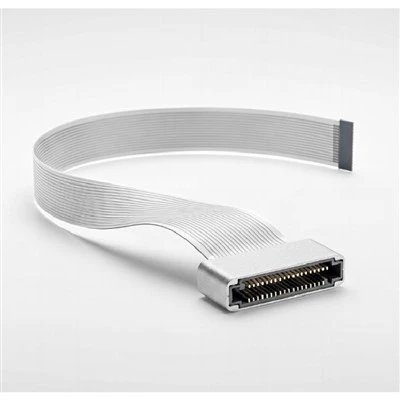
If you’re looking to upgrade your vehicle’s wiring, or want to discuss how FFCs can help you hit weight or performance targets, hit us up to chat more. We can share more sample data, or even a custom weight comparison for your specific model.
Medical Flexible Flat Cable References:
- Automotive Wire Harness Weight Optimization, SAE International, 2022
- Flexible Flat Cables for Electric Vehicles, Journal of Automotive Engineering, 2023
- Vibration and Thermal Durability Testing of Automotive FFCs, International Council on Automotive Safety, 2021
Tennrich Electronics Technical Development (Kunshan) Co., Ltd.
As one of the most professional automotive flexible flat cable manufacturers and suppliers in China, we’re featured by quality products and low price. Please rest assured to buy cheap automotive flexible flat cable for sale here from our factory. We also accept customized orders.
Address: NO.159 South Wusongjiang Road ,Kunshan Economic Technical & Development zone,Suzhou city,Jiangsu province, China.
E-mail: foreigntrade@tennrich.net
WebSite: https://www.china-ffcs.com/
