If you’re in the market for CO2 plants for food-grade production, industrial use, or even commercial beverage operations, one of the most common questions I get from clients (whether they’re small craft brewers or large industrial processors) is: “Wait, how much water do these things actually need?” It’s not a trivial detail—skip or mess up water requirements, and your plant won’t run efficiently, might break down early, or even fail to meet regulatory standards. Let’s break this down like we do when walking a new client through a site assessment, no jargon, no stuffy rules, just what you actually need to know. CO2 Plant

First, let’s clarify: we’re talking about industrial CO2 plants here, not a home carbonator for soda. These plants pull CO2 from various waste streams—like fermentation off-gas from breweries or biogas plants, or even flue gas from cement manufacturing—then purify, compress, and store it for use. Water is non-negotiable at every stage, but it’s not just for rinsing parts or filling a cooling loop, like a old ice machine. There are three core uses for water in these systems, and each has its own hard requirements that can’t be fudged.
Let’s start with the biggest one: process water for the purification and compression side. Most CO2 plants use a cryogenic or adsorption purification process, and both rely heavily on high-quality water to keep their equipment running. For adsorption systems (which are super common for smaller to mid-sized operations), you need water to run the desiccant regeneration cycles? No, wait, let me get that right—actually, adsorption systems use water-cooled compressors to keep the unit from overheating during the compression step where CO2 gets squeezed into a liquid. If that cooling water is dirty, it builds up scale on the heat exchanger coils, and suddenly your compressor is working 20% harder, using more electricity, and risking downtime. For cryogenic plants, it’s even more specific: the condensation step that turns gaseous CO2 into liquid needs water that’s low in total dissolved solids (TDS) — like under 50 parts per million (ppm) — to prevent scaling in the cold boxes. I’ve seen a client skip that detail once: they used regular tap water, and within 6 months, their cryo unit had to be completely taken apart to chisel out scale, costing them 2 weeks of production and way more than the cost of upgrading their water supply.
Then there’s utility water: this is the water you use for cleaning, rinsing parts, and general facility upkeep. It doesn’t need to be as pure as process water, but it still has to meet basic potable standards (no bacteria, no hazardous contaminants) because you never want to track something unsanitary into a space where you’re handling food-grade CO2. For industrial operations, we usually recommend a dedicated utility water line, not the same line you use for your office breakroom sink—contaminants in that could cross-contaminate if a valve leaks.
Wait, what about blowdown water? Yeah, that’s the water you drain periodically from cooling loops to remove built-up minerals, right? That’s a key part of maintenance for any CO2 plant, and it’s not a “set it and forget it” thing. The blowdown rate depends on how hard your source water is—if you have really hard water (over 150 ppm calcium carbonate), you’ll need to blow down 10-15% of the cooling loop every week to prevent scale. If it’s soft water, maybe 5% a week. Skimp on blowdown, and you’re back to that scaling problem, which leads to higher energy bills and more repairs.
Now, let’s get to the numbers because that’s what everyone actually asks for. I hate when generic “industry averages” are thrown around because they don’t account for the size of the plant or the source of CO2. For example, a small 500-ton per year CO2 plant for a craft brewery might use around 15,000-20,000 gallons of water per day total. A mid-sized 5,000-ton per year plant for a regional beverage maker? That jumps to 120,000-150,000 gallons a day. And a large industrial plant that pulls CO2 from a cement plant’s flue gas? That can be 300,000+ gallons a day, because those plants run 24/7 at full load.
But wait—don’t just look at total volume, because source quality is way more important than quantity. I’ve had a client with a perfect municipal water supply (TDS 30 ppm, soft) that used 10% less water than a neighboring plant with well water at 220 ppm TDS. The hard well water needed extra water for pre-treatment—like reverse osmosis (RO) to lower TDS—to keep process parts from failing. Pre-treatment is a big cost people miss too: if your source water is bad, you’ll need an RO system or water softener, which adds upfront cost and ongoing maintenance. We always do a quick water test for potential clients before we even send a quote, because if their water is too hard or has weird contaminants, we have to adjust the plant design to compensate.
Another thing: water reuse is non-negotiable these days, especially if you’re in a region with water restrictions, like California or the Pacific Northwest. Most modern CO2 plants are designed with closed-loop cooling systems, which means the water that cools the compressor and cryo unit is reused over and over—only a small amount is lost to evaporation or blowdown. That cuts total water use by 70-80% compared to old open-loop systems that dump water after one use. I can’t tell you how many times a client has come to us saying they “can’t afford” a big water bill, and switching to a closed-loop system is the fix they didn’t know about. It’s not just sustainable—it saves them thousands a year on utility costs.
Wait, let’s address common myths because I get so many of these. First myth: “I can use wastewater from my brewery for the CO2 plant.” No—brewery wastewater has yeast, sugars, and other organic compounds that will clog filters and contaminate the CO2 during purification. It might sound like a green idea, but it will lead to product quality issues, and if you’re making food-grade CO2, the FDA won’t let you use that. Second myth: “More water is better to keep the plant cool.” No—running extra water through the cooling loop just wastes money, doesn’t improve performance, and increases blowdown frequency. You need to match flow rate to the plant’s compressor load, which our engineers calculate during the site assessment. Third myth: “Tap water works for all plants.” I mentioned this earlier, but I’ll say it again: tap water is fine for small plants, but if you’re running a 10,000-ton per year industrial plant, you’ll need RO-treated process water—skipping that is a recipe for breakdowns.
Now, let’s tie this to why this matters for your bottom line, not just technical specs. A friend of mine runs a CO2 plant in Texas that skipped proper water pre-treatment. They had a scaling issue that cost them $45,000 in repairs and 3 weeks of downtime last year. If they had just invested in a $5,000 water test and a $10,000 RO system upfront, they would have avoided that entirely. On the flip side, a client we did a site assessment for last year had well water that was way too hard, so we recommended a closed-loop system with a softener and RO pre-treatment. Their water use went down 65%, and their energy bills dropped 12% because their compressor runs cooler and more efficiently. It’s not just a compliance thing—it’s a profit thing.
Wait, also: regulatory stuff. If you’re producing food-grade CO2, you have to follow FDA standards for water quality. The water used in the process can’t have any contaminants that would end up in the final CO2 product. That means no heavy metals, no pathogens, no organic compounds. For industrial CO2 that’s used in things like fire suppression or industrial refrigeration, you might have looser standards, but you still need to meet local environmental regulations for wastewater discharge. We always make sure our plant designs align with both FDA and local EPA rules, so our clients don’t have to worry about fines or shutdowns.
Let’s make this actionable, because I know you might be thinking, “Okay, but what do I need to do right now?” First, get a basic water test of your source water—municipal, well, whatever—with TDS, hardness, pH, and any common contaminants like iron or manganese. That’s the first step. Then, if you’re looking at a CO2 plant, don’t just ask for a quote on capacity—ask the supplier how they account for water needs, especially pre-treatment and closed-loop systems. A lot of cheap quotes from overseas suppliers skip the water pre-treatment, which means you’ll have to spend extra to fix it later. That’s the difference between a good supplier and one that’s just out to make a quick sale.
I can’t stress enough how important the water assessment is. We’ve had clients come to us with a quote from another vendor that was $20,000 cheaper, but when we did the water test, we had to add $15,000 in pre-treatment equipment, plus $8,000 in ongoing water costs they didn’t budget for. It ended up being way more expensive long-term than going with a supplier that includes water-specific design in their quote.
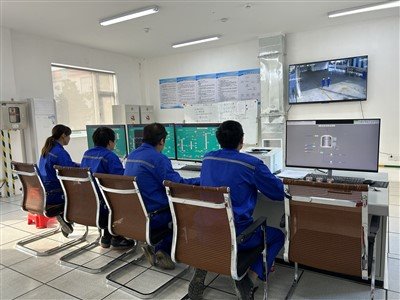
At the end of the day, water isn’t an afterthought in a CO2 plant—it’s a core component that affects efficiency, maintenance, compliance, and your bottom line. Skip the details, and you’re setting yourself up for headaches. We’ve been in the CO2 plant game for years, so we know exactly how to tailor water systems to your specific setup, no one-size-fits-all nonsense. If you’re ready to talk through your needs—whether you’re a craft brewer looking for a small system or an industrial operator scaling up—reach out to us to schedule a site assessment or ask any questions you have about water requirements. We’re here to make sure your plant runs smoothly, not just check a box on delivery.
Air Separation Unit References:
- American Society of Mechanical Engineers. (2020). Water Requirements for Industrial Gas Processing Plants. ASME International.
- Food and Drug Administration. (2022). Guidance for Industry: Food-Grade Carbon Dioxide Production and Quality. U.S. Department of Health and Human Services.
- Water Environment Federation. (2021). Industrial Water Reuse Practices for Manufacturing Facilities. WEF Press.
- International Organization for Standardization. (2019). ISO 11150:2019, Industrial Carbon Dioxide – Specifications and Test Methods. ISO.
- U.S. Environmental Protection Agency. (2020). Water Efficiency Guidelines for Industrial Manufacturing. EPA 832-R-20-001.
Hanturbo Technology (Zhejiang) Co., Ltd.
Hanturbo Technology (Zhejiang) Co., Ltd. is one of the most professional co2 plant manufacturers and suppliers in China, also supports custom service. We warmly welcome you to buy discount co2 plant made in China here and get quotation from our factory. For price consultation, contact us.
Address: No.118, Wangluo Road, Deqing County, Huzhou City, Zhejiang Province, China.
E-mail: andyxu@hanturbo.com.cn
WebSite: https://www.hanturbo-gas.com/
