Hey there! As a supplier in the field of Time and Frequency Synchronization, I’ve had my fair share of experiences dealing with the challenges and solutions in a distributed system. In this blog, I’m gonna share with you how we can implement time and frequency synchronization in such a system. Time and Frequency Synchronization
Why Synchronization Matters in a Distributed System
First off, let’s talk about why synchronization is such a big deal in a distributed system. A distributed system consists of multiple components that are spread out across different locations. These components need to work together in harmony, and accurate time and frequency synchronization are the keys to making that happen.
For example, in a financial trading system, every millisecond counts. If the clocks of different trading servers aren’t synchronized, it can lead to trading errors and financial losses. In a telecommunications network, accurate frequency synchronization ensures that signals are transmitted and received correctly, preventing dropped calls and data transfer issues.
The Challenges of Synchronization in a Distributed System
Implementing time and frequency synchronization in a distributed system isn’t a walk in the park. There are several challenges that we need to overcome.
One of the main challenges is the latency in the network. When a synchronization signal is sent from a master clock to slave clocks, it takes time for the signal to travel through the network. This delay can vary depending on the network conditions, such as congestion and the distance between the master and slave clocks.
Another challenge is the difference in the hardware and software used in different components of the distributed system. Each device may have its own internal clock with different levels of accuracy and stability. These differences can make it difficult to achieve a high level of synchronization across the entire system.
Solutions for Time and Frequency Synchronization
So, how do we tackle these challenges? Well, there are several solutions that we can use.
GPS-based Synchronization
One of the most popular methods is GPS-based synchronization. GPS satellites transmit highly accurate time signals. By using a GPS receiver, a device can receive these signals and synchronize its internal clock with the GPS time. This method is highly accurate and can provide synchronization across a wide area.
However, GPS-based synchronization also has its limitations. GPS signals can be affected by weather conditions and physical obstructions, such as buildings and mountains. In addition, relying solely on GPS can be risky in case of a GPS outage.
IEEE 1588 Precision Time Protocol (PTP)
Another solution is the IEEE 1588 Precision Time Protocol (PTP). PTP is a protocol that allows devices in a network to synchronize their clocks with high precision. It works by exchanging time – stamped messages between a master clock and slave clocks and calculating the network delay.
PTP can achieve sub – microsecond synchronization accuracy, which makes it suitable for applications that require high – precision time synchronization, such as power grid control and industrial automation. The advantage of PTP is that it can operate over standard Ethernet networks, which makes it cost – effective and easy to implement.
Atomic Clocks
Atomic clocks are the most accurate timekeeping devices available. They use the vibrations of atoms to measure time with extremely high precision. In a distributed system, atomic clocks can be used as master clocks to provide a highly accurate time reference.
However, atomic clocks are very expensive and require specialized maintenance. They are usually used in applications where the highest level of accuracy is required, such as in scientific research and national timing systems.
Our Approach as a Supplier
As a Time and Frequency Synchronization supplier, we take a comprehensive approach to solving the synchronization problems in distributed systems.
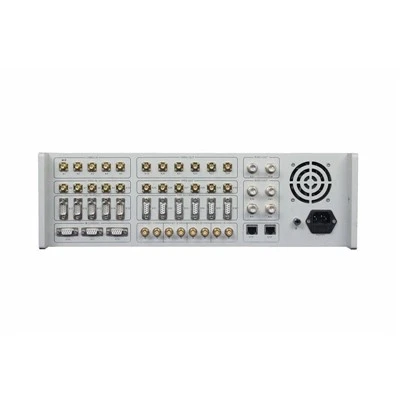
We offer a range of products, including GPS receivers, PTP grandmaster clocks, and atomic clock – based systems. Our products are designed to be reliable, accurate, and easy to integrate into existing distributed systems.
We also provide customized solutions based on the specific requirements of our customers. For example, if a customer has a distributed system with a large number of nodes and high – precision synchronization requirements, we can design a solution that combines GPS – based synchronization, PTP, and atomic clocks to achieve the best result.
In addition to hardware products, we offer technical support and training services. Our team of experts can help customers with the installation, configuration, and maintenance of our synchronization systems. We also provide regular software updates to ensure that our products are always up – to – date and performing at their best.
Case Studies
Let me share a couple of case studies to illustrate how our solutions have helped our customers.
One of our customers is a telecommunications company that operates a large – scale wireless network. They were facing issues with signal interference and dropped calls due to inaccurate frequency synchronization between their base stations. We installed our PTP – based synchronization system in their network. The system was able to synchronize the clocks of all the base stations with high precision, improving the signal quality and reducing the number of dropped calls significantly.
Another customer is a financial institution that runs a high – frequency trading platform. They needed to ensure that all their trading servers were synchronized within a few microseconds. We provided them with a solution that combined GPS and atomic clocks. The solution was able to provide highly accurate time synchronization, which helped them avoid trading errors and gain a competitive edge in the market.
How to Choose the Right Solution
When choosing a time and frequency synchronization solution for your distributed system, there are several factors that you need to consider.
First, you need to consider the accuracy requirements of your application. If your application requires high – precision synchronization, such as in scientific research or high – frequency trading, you may need to choose a solution that includes atomic clocks or PTP. If your accuracy requirements are less strict, GPS – based synchronization may be sufficient.
Second, you need to consider the cost. Some solutions, such as atomic clocks, are very expensive, while others, like GPS receivers and PTP – based systems, are more cost – effective. You need to balance the accuracy requirements with the cost to find the right solution for your budget.
Finally, you need to consider the ease of integration. You want a solution that can be easily integrated into your existing distributed system without causing too much disruption. Our products are designed with ease of integration in mind, and we can provide you with the necessary support to ensure a smooth integration process.
Conclusion
In conclusion, implementing time and frequency synchronization in a distributed system is a complex but achievable task. By understanding the challenges and using the right solutions, such as GPS – based synchronization, PTP, and atomic clocks, you can ensure that your distributed system operates smoothly and efficiently.
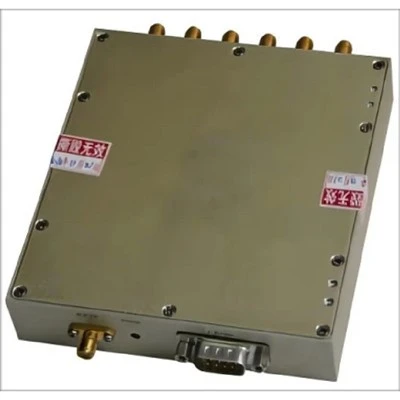
Time Sever As a Time and Frequency Synchronization supplier, we’re committed to providing you with the best products and services to meet your synchronization needs. If you’re interested in learning more about our solutions or if you have a specific synchronization problem that you need to solve, don’t hesitate to reach out to us for a procurement discussion. We’re here to help you find the right solution for your distributed system.
References
- IEEE Std 1588 – 2008, IEEE Standard for a Precision Clock Synchronization Protocol for Networked Measurement and Control Systems.
- "Time – Transfer Technologies for Synchronizing Distributed Systems" by C. N. Papatheodorou and S. P. Vouvounis.
- "GPS – Based Time and Frequency Distribution Systems" by N. P. Garner.
China Go-Sat Microwave Co., Ltd.
China Go-Sat Microwave Co., Ltd. is one of the most professional time and frequency synchronization manufacturers and suppliers in China. With abundant experience, we warmly welcome you to buy advanced time and frequency synchronization made in China here and get quotation from our factory. All customized products are with high quality and competitive price.
Address: No. 3908 ShiBo Avenue, Baqiao District, Xi’an, China
E-mail: sales@go-satcom.com
WebSite: https://www.go-satcom.com/
