The Autoclaved Aerated Concrete (AAC) industry has witnessed remarkable growth in recent years, driven by the demand for sustainable and energy – efficient building materials. As a leading supplier of AAC Ingredient Pouring Systems, I often get asked about the crucial topic of pouring force adjustment. In this blog, I’ll delve into what pouring force adjustment is, why it matters, and how it can significantly impact the quality of AAC production. AAC Ingredient Pouring System
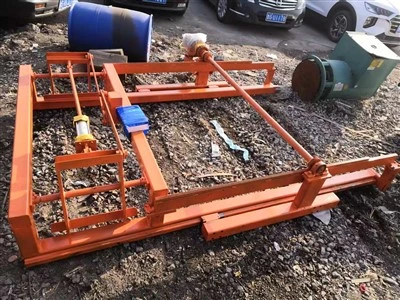
Understanding the AAC Ingredient Pouring System
Before we jump into pouring force adjustment, it’s essential to have a basic understanding of the AAC Ingredient Pouring System. The AAC production process involves mixing various raw materials, such as lime, cement, sand, and aluminum powder, with water to form a slurry. This slurry is then poured into molds where it undergoes a chemical reaction to expand and harden.
The AAC Ingredient Pouring System is responsible for accurately dispensing the prepared slurry into the molds. It consists of components like pumps, pipes, valves, and nozzles. The pouring force, in this context, refers to the pressure and velocity at which the slurry is pushed through the system and into the molds.
What is Pouring Force Adjustment?
Pouring force adjustment is the process of fine – tuning the pressure and flow rate of the AAC slurry as it is being poured into the molds. This adjustment is not a one – size – fits – all operation. Different AAC products, such as blocks or panels, may require different pouring forces. Additionally, factors like the type of raw materials used, the ambient temperature, and the size of the molds can all influence the optimal pouring force.
For instance, if the pouring force is too low, the slurry may not fill the molds completely, leading to voids and uneven surfaces in the final AAC product. On the other hand, if the pouring force is too high, it can cause the slurry to splash out of the molds, waste materials, and also result in inconsistent expansion of the AAC within the mold.
Why is Pouring Force Adjustment Important?
Product Quality
The most obvious reason for pouring force adjustment is to ensure high – quality AAC products. A well – adjusted pouring force allows for uniform filling of the molds. This uniformity is essential for achieving consistent density, strength, and dimensional accuracy across all AAC products. For example, in construction, AAC blocks with consistent dimensions are easier to stack and build with, and those with uniform density provide reliable insulation and structural support.
Material Efficiency
Proper pouring force adjustment helps in reducing material waste. When the pouring force is set correctly, the slurry fills the molds precisely without any spillage. This means that less raw material is wasted, which not only saves costs but also has environmental benefits by reducing the consumption of natural resources.
Production Efficiency
In a large – scale AAC production facility, time is money. An optimized pouring force can speed up the pouring process. If the force is adjusted to allow for a smooth and rapid flow of the slurry into the molds, the overall production cycle time can be reduced. This enables the production facility to increase its output and meet market demands more effectively.
Factors Affecting Pouring Force Adjustment
Raw Material Properties
The characteristics of the raw materials used in AAC production play a significant role in determining the appropriate pouring force. For example, if the sand used has a coarser particle size, the slurry may be more viscous, requiring a higher pouring force to ensure proper flow. Similarly, the type and amount of additives in the slurry can also affect its flow properties.
Mold Design
The size, shape, and complexity of the molds are important factors in pouring force adjustment. Larger molds may require a higher pouring force to ensure complete filling, while molds with intricate shapes may need a more carefully controlled force to prevent air entrapment and ensure uniform filling.
Ambient Conditions
The temperature and humidity of the production environment can affect the pouring force. Higher temperatures can cause the slurry to set more quickly, which may require a faster pouring speed and higher force. Conversely, lower temperatures can increase the viscosity of the slurry, also necessitating an adjustment in the pouring force.
Methods of Pouring Force Adjustment
Pump Control
One of the most common methods of adjusting the pouring force is by controlling the pump that moves the slurry through the system. Most modern pumps used in AAC Ingredient Pouring Systems are equipped with variable – speed drives. By adjusting the pump speed, the pressure and flow rate of the slurry can be precisely controlled. For example, increasing the pump speed will result in a higher pouring force, while decreasing it will lower the force.
Valve Regulation
Valves in the pouring system can also be used to adjust the pouring force. By partially closing or opening the valves, the resistance to the flow of the slurry can be changed. A more closed valve will increase the pressure upstream, resulting in a higher pouring force, while an open valve will reduce the pressure and the pouring force.
Monitoring and Optimization
To ensure that the pouring force is always at the optimal level, continuous monitoring is necessary. Sensors can be installed in the pouring system to measure parameters such as pressure, flow rate, and temperature. The data collected from these sensors can be used to make real – time adjustments to the pouring force.
In addition, regular quality control checks of the AAC products are essential. By analyzing the density, strength, and dimensional accuracy of the products, any issues related to the pouring force can be identified and corrected. Over time, this data can also be used to develop more accurate pouring force adjustment strategies for different production scenarios.
How Our AAC Ingredient Pouring System Facilitates Pouring Force Adjustment
As a supplier of AAC Ingredient Pouring Systems, we have designed our systems with the latest technology to make pouring force adjustment as easy and precise as possible. Our pumps are equipped with advanced variable – speed drives that allow for fine – tuned control of the pouring force. We also provide comprehensive monitoring and control software that integrates data from all sensors in the system.
Our team of experts is always ready to assist our clients in setting up and optimizing their pouring systems. We offer on – site training to ensure that the operators understand how to make the necessary pouring force adjustments and maintain the system for optimal performance.
Conclusion
Pouring force adjustment is a critical aspect of AAC production. It directly impacts the quality, efficiency, and cost – effectiveness of the manufacturing process. By understanding the factors that affect pouring force and using the right methods to adjust it, AAC production facilities can produce high – quality products with minimal waste.
AAC Turning Cutting System If you are in the AAC industry and looking for a reliable AAC Ingredient Pouring System that can effectively handle pouring force adjustment, we are here to help. Our systems are designed to meet the diverse needs of AAC producers, and our technical support team can provide you with the expertise you need. Contact us to discuss your specific requirements and start a procurement negotiation.
References
- "Autoclaved Aerated Concrete: Properties, Production and Applications" by various authors.
- Industry reports on AAC production technology and best practices.
Qingzhou Shuangfengda Machinery Engineering Co., Ltd.
As one of the most professional AAC ingredient pouring system manufacturers and suppliers in China, we’re featured by quality products and good price. Please rest assured to buy durable AAC ingredient pouring system for sale here from our factory. Customized orders are welcome.
Address: Gaojiazhuang Village, Gaoliu Town, Qingzhou City, Shandong Province
E-mail: lenhond@163.com
WebSite: https://www.sfdmachinery.com/
