Hey there, I’m Jake, and for the past 12 years, I’ve been selling bottle cap injection molding machines to businesses that rely on tight seals, fast production, and zero headaches on the factory floor. Last week, I got a call from a guy at a small soda bottler in Ohio. He was panicking because his caps were leaking, his machine was running 20 hours a day but only pumping out 80% good parts, and he’d already replaced three molds in two months. Turns out, he’d switched to a cheaper, low-grade plastic pellet batch to cut costs. That call stuck with me because it’s so relatable—most people fixate on the machine itself when something goes wrong, but 70% of the time, the root issue starts way before the resin hits the injection unit. Today, let’s break down exactly how raw material quality wrecks (or works for) your bottle cap injection molding machine—straight from the guy who’s walked factories through this mess way too many times. Bottle Cap Injection Molding Machine
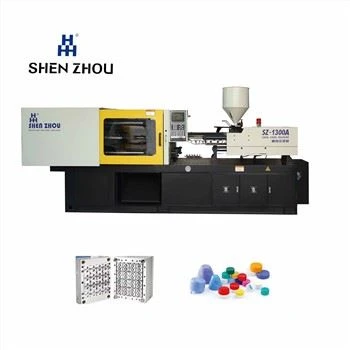
First, let’s get one thing straight: bottle caps aren’t just lids. They’re precision parts. A standard 2-liter soda cap has 12 tiny ridges, a tear-off band, and a liner that needs to crimp just right to the bottle neck to stop carbonation from escaping or liquid from spilling. The raw material you feed into your molding machine is the foundation of every single one of those parts—and every single move your machine makes. Let’s start with the most obvious material: the plastic resin. Most bottle caps are made from PP (polypropylene), sometimes LDPE for liners, but not all PP is created equal. I’ve seen machine operators joke about “cheapo pellets that look like they were sorted from a recycling bin at a gas station” (okay, maybe that’s me joking, but it’s not far off). Low-grade PP has inconsistent melt flow rates (MFR), which is how easily the plastic flows when heated. If one batch has an MFR of 20 g/10min and the next is 35, your machine’s settings—set for the first batch—won’t work for the second. You’ll end up with either under-filled caps (they look like they’re missing a chunk of the top) or flash (that thin, useless plastic shavings around the edges).
What does that do to your machine? When you have to adjust the injection pressure, temperature, or hold time every time the resin changes, you’re putting unnecessary stress on the hydraulic units and screws. Last year, a client in Mexico switched to a $20 cheaper per-ton resin to save money. Within three months, their screw started wearing out faster than normal. Why? The inconsistent melt flow meant they were cranking up pressure to force the plastic into the mold, and that extra friction ate away at the screw’s surface. A new screw for a cap molding machine costs around $1,500—they saved $12,000 on resin, but dropped $1,500 on a screw in three months. Oops. Also, low-grade PP often has impurities: small bits of metal, paper, or leftover plastic from bad recycling. Those impurities can get stuck in the nozzle of your machine. The nozzle is the part that sprays molten plastic into the mold, right? If a tiny metal shard is stuck, it’ll clog the nozzle, leading to downtime. One client had to stop production 11 times in a single 12-hour shift because their nozzle was clogged with impurities from cheap resin. Every time that happens, you’re not just losing 15 minutes of downtime—you’re also wasting the plastic that’s already in the barrel, which means more scrap.
Wait, it’s not just the plastic resin. What about additives? Antioxidants, slip agents, colorants—those tiny ingredients can make or break both the cap and your machine. Let’s talk about antioxidants first. These keep the plastic from breaking down when it’s heated in the machine’s barrel. If you skimp on antioxidants, the plastic will start to degrade after a few cycles. That degraded plastic forms a gunk called “dross” that sticks to the inside of the barrel, the screw, and even the mold walls. Now, you have to do barrel purges way more often than usual. Barrel purges are those chemical gels you shoot through the machine to clean out old plastic—they’re not cheap, and more importantly, every purge means more downtime. A client of mine in Texas was doing a barrel purge every 5 days with cheap antioxidant-free resin. With good resin, they only do one every 4 weeks. That’s 3 extra purges a month, $80 a purge, and 2.5 hours of downtime each time. Over a year, that’s $2,880 in purges alone, plus lost production. Not to mention, dross on the mold walls makes the caps look cloudy or have rough edges, so you’re throwing those away too.
Then there’s colorants. A lot of bottlers use colored caps—red for cherry soda, blue for sports drinks—and cheap colorants are not your friend here. Low-quality pigment often has large, uneven particles. When you inject that into the mold, those particles can scratch the inside of the mold cavity. Molds are precision-made, often with polished steel that costs thousands of dollars. A tiny scratch from pigment particles means the caps won’t seal right, and eventually, you have to re-polish or replace the mold. I once had a client who switched to a $0.02 cheaper per-pound colorant because he thought it wouldn’t matter. Within 6 months, his 8-cavity mold had scratches on every cavity. Fixing that mold cost him $3,200. That $0.02 per pound? It ended up costing him $3,200. Math works out, right? Nope.
Now, let’s talk about something most people don’t even consider: regrind. A lot of factories like to add a percentage of regrind (scrap from their own production, sometimes even scrap from other places) back into the virgin resin to cut costs. But adding too much regrind, or regrind that’s been processed too many times, is a recipe for disaster. Every time plastic is melted and re-melted, its molecular structure breaks down. It becomes brittle, so the caps will crack when they’re being applied to bottles. But for your machine, too much regrind means more dross, higher melt viscosity, and more stress on the screw and barrel. I had a guy from a water bottling plant call me a few months ago, yelling that his machine was making 20,000 cracked caps a day. Turns out, he was adding 40% regrind from a local plastic scrap yard. That regrind had been processed 7 times, so it was super brittle. His screw was also wearing out because he was cranking up pressure to get that brittle plastic to flow. We advised him to drop regrind to 15% max, use only regrind from his own in-house scrap (no third-party stuff), and within a month, his cracked caps were down to less than 1,000 a day, and his screw wear slowed way down.
Wait, let’s not forget about liner material. A lot of caps have a plastic or foam liner inside, right? That’s what makes the seal airtight. If you use cheap liner material, it can tear when it’s being crimped onto the bottle. But how does that affect the molding machine, not just the cap? When the liner tears, it can get stuck in the nozzle or the mold, causing clogs. Or, if the liner is too thin, it might not fill the cavity, so you have to adjust the injection pressure again. Also, some low-grade liners have chemicals that can react with the molten PP, leading to more dross. It’s a domino effect. You fix one small thing (cheaper liner) and it messes up a bunch of other parts of your machine.
Now, let’s talk about performance metrics—stuff you actually care about: uptime, scrap rate, maintenance costs. I’ve seen clients go from a 92% uptime rate to 78% just by switching from low-grade resin to good, consistent PP. That 14% downtime? Add up over a month, that’s like 33 extra hours of production time lost. If you’re running 24/7, that’s almost 2 full days of lost output, plus the cost of the parts you have to scrap. Another stat: clients that use high-quality raw materials see 30% less maintenance on their injection molding machines. Why? Because consistent resin means less pressure adjustment, fewer clogs, less dross, less wear on the screw and barrel.
But here’s the thing—this doesn’t mean you have to buy the most expensive resin on the market. It means buying consistent, food-grade resin from a reputable supplier who can give you batch test data. Ask for MFR values, impurity reports, antioxidant levels, everything. That’s the key. Consistency, not just high price. I work with a lot of bottlers who are on tight budgets, but when we sit down and run the numbers, buying good, consistent resin is cheaper in the long run. Let’s do a quick example: say you make 1 million caps a month. Cheap resin is $0.80 per pound, good consistent resin is $0.95 per pound. That’s $150,000 extra a year on resin. But if the cheap resin causes you to lose 10% of your production to scrap and downtime, plus $2,000 in mold repairs and $1,000 in extra maintenance, that’s $125,000 a year in losses. You’re spending $150k extra on resin, but saving $125k, so net $25k more. And that’s not even counting the lost revenue from downtime. If you can’t ship caps because your machine is broken, that’s way more than $25k.
I want to make this real for you, not just a bunch of numbers. Last year, I was at a bottling plant in Georgia that was having all the issues I mentioned: clogs, dross, screw wear. They were convinced their machine was bad, so they were looking to buy a new one. I asked to see their resin batches—turns out, they were buying resin from a supplier that dumped all their overstock batches together. One week, they got resin with MFR 18, next week MFR 38. That’s the problem, not the machine. We helped them switch to a supplier that gives them identical batches every time, did a few quick machine tweaks, and their uptime went from 80% to 95% in 2 weeks. They didn’t need a new machine—they just needed better raw materials. That’s the kind of story I live for.
Look, bottle cap injection molding machines are tough, but they’re not invincible. They work best when the material going into them is predictable. Every time you switch to a cheaper, inconsistent raw material, you’re not just risking bad caps—you’re wearing out your machine faster, spending more on maintenance and downtime, and missing out on production. I’ve been in this game long enough to tell you: the best investment you can make in your molding operation isn’t a bigger machine or a newer mold—it’s consistent, high-quality raw materials.

If you’re dealing with caps that leak, scrap rates that are through the roof, or your machine is breaking down more than it should, let’s chat. I’ve walked hundreds of factories through this, and I can help you figure out if it’s a machine issue, a material issue, or a mix. No sales pitch, no pressure—just real advice from someone who’s been there.
Auxiliary Machinery References
- International Society of Plastics Engineers (SPE). (2021). "Injection Molding Fundamentals for Packaging Components." SPE Technical Report.
- Plastic Technology Association (PTA). (2022). "Impact of Raw Material Consistency on Injection Molding Machine Performance." PTA Industry White Paper.
- ASTM International. (2020). "Standard Guide for Injection Molding of Polypropylene Packaging Parts." ASTM D5785-20.
Shenzhou Machinery Co., Ltd.
As one of the most professional bottle cap injection molding machine manufacturers and suppliers in China, we’re featured by quality products and good price. Please feel free to buy advanced bottle cap injection molding machine made in China here from our factory. We also accept customized orders.
Address: Fenghuang Town, Zhangjiagang City, Jiangsu Province, P.R.China
E-mail: sale@shenzhoumac.com
WebSite: https://www.shen-zhoumachinery.com/
