If you’re a food processing, pharmaceutical, or chemical manufacturer relying on spray drying to turn liquid products into stable powders, you already know this equipment doesn’t come cheap. Between initial installation, ongoing energy bills, maintenance, and downtime, the costs can add up fast—especially if you’re operating with outdated equipment or not optimizing every part of your process. As a spray dryer supplier who’s worked side-by-side with plant operators for over a decade, I’ve seen hundreds of teams blow their budgets on unnecessary expenses while missing simple, science-backed adjustments that cut costs without sacrificing powder quality. Let’s break down the most impactful, actionable ways to reduce spray dryer costs, tailored to fit real-world manufacturing workflows. Spray Dryer
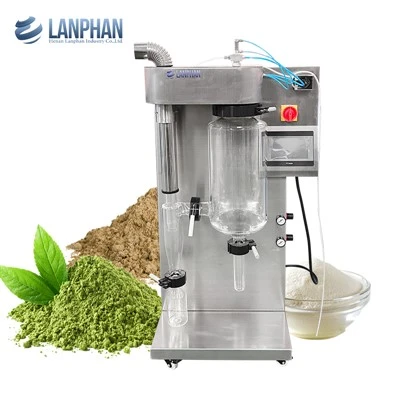
First, let’s talk about energy use, which makes up 40–50% of a spray dryer’s total operating cost for most facilities. A common mistake I see is operators running their dryers at higher inlet temperatures than needed to compensate for inefficiencies in the feed. That extra heat doesn’t just waste energy—it also degrades heat-sensitive products like probiotics, fruit juices, or biopharmaceuticals, leading to product rejections and wasted raw materials. The fix here is feed optimization. If your feed is too dilute, you’re forcing the dryer to evaporate far more water than necessary, which cranks up energy use. For example, a dairy client of mine was running a 30% total solids whey feed through a standard spray dryer, needing 1,200°C inlet temperatures to get a dry powder. When we adjusted their pre-evaporation system to boost total solids to 45% before feeding it to the dryer, their inlet temperature dropped to 900°C, cutting their natural gas usage by 28% overnight. Pre-evaporation doesn’t require a full equipment overhaul either—many of my clients add low-cost multi-effect evaporators or even simple membrane filtration to concentrate their feed between batches, a small investment that pays for itself in 3–6 months.
Next, air handling is another major energy drain, especially for older spray dryers that rely on outdated centrifugal fans. A poorly sealed air system leaks 15–20% of heated air before it even reaches the drying chamber, forcing the heater to run nonstop to make up for lost volume. I recently worked with a spice manufacturer that was losing 18% of their heated air through cracked duct joints and a worn-out inlet air filter housing. A $120 sealant kit and 90-minute labor fix cut their fan energy use by 12% in a single week. Beyond sealing, upgrading to high-efficiency variable frequency drives (VFDs) for your fans and pumps is a game-changer. VFDs adjust motor speed to match the actual airflow and pressure needs of the process, instead of running at full capacity 24/7 regardless of demand. For a 500 kg/hr spray dryer, switching from a fixed-speed fan to a VFD can reduce electrical energy use by up to 30% annually—no new dryer required, just a simple retrofitting. I always make sure to mention this option to new clients who think they need a full replacement to cut costs; most of the time, a VFD upgrade delivers a faster return on investment than a new unit.
Maintenance is another area where manufacturers waste money without even realizing it. Unplanned downtime on a spray dryer can cost $10,000–$50,000 per hour, depending on your product output, so skipping routine checks to save time or money is a false economy. I’ve seen clients delay replacing worn-out nozzle parts (for pressure nozzles) or atomizer disks (for rotary atomizers) only to have the part fail mid-batch, ruining an entire order of expensive raw material and shutting down production for 12+ hours. The solution is a predictive maintenance schedule tailored to your specific equipment and product. For example, if you run a food product with high sugar content, nozzle tips will erode 2–3x faster than if you dry a low-abrasive chemical, so replacing them every 4 weeks instead of every 8 is non-negotiable. I provide all my clients with a free customized maintenance checklist, including part replacement timelines, filter change schedules, and thermal imaging checks for heater coils, which reduces unplanned downtime by an average of 35% within the first year. Another small maintenance tweak: cleaning your air disperser (the part that shapes the spray pattern in the drying chamber) every 2 weeks prevents buildup of powder residue, which disturbs air flow and increases energy use. A quick 30-minute clean avoids hours of later adjustments or even a damaged chamber.
Atomization efficiency is often overlooked, but it directly impacts both energy use and powder yield. If your atomizer is producing droplets that are too large, you need more heat to dry them, leading to higher energy costs and a higher rate of “over-dried” or under-dried powder that gets rejected. If droplets are too small, you risk entraining them in the exhaust air, leading to product loss in the cyclones or bag filters. For example, a pharmaceutical client was losing 10% of their lactose powder to exhaust because their rotary atomizer disk had worn unevenly, producing inconsistent droplet sizes. Replacing the disk and adjusting the rotational speed to match their feed viscosity cut product loss by 9% and reduced their exhaust fan load by 7% because they were moving less excess air. Testing your droplet size distribution with a simple laser particle sander (a low-cost tool we can rent or recommend to clients) every 3 months ensures your atomizer is optimized, so you’re not wasting material or energy on a poorly sized spray.
Powder recovery also plays a big role in total cost of ownership. Many facilities run their exhaust systems at lower pressure to save energy, but this reduces the efficiency of your cyclones and bag filters, leading to more powder being lost in the exhaust. For fine powders, switching from standard cyclones to high-efficiency cyclones, or adding a secondary bag filter, can increase recovery from 85% to 99%, which is huge when you’re working with high-value products like biopharmaceuticals or specialty chemicals. I worked with a probiotic manufacturer that was losing 12% of their $250/kg live culture powder to exhaust before we upgraded their cyclones. The upgrade cost $15,000, but they recovered $18,000 worth of powder every month, so the investment paid for itself in less than a month. For lower-value products, even a simple cleaning of your cyclone baffles every 6 months can improve recovery by 2–3% without any equipment changes.
Water usage is another cost that’s often ignored, especially in facilities where water is metered at high rates. Spray dryers use a lot of water for cleaning between batches, but most teams use far more water than necessary for their cleaning cycles. For example, a common practice is running a 30-minute hot water clean every shift, but many clients find that a 15-minute recirculating clean with a mild, food-safe detergent is just as effective at removing residue. I’ve helped clients cut their cleaning water usage by 40% by adjusting cycle times, reusing rinse water for pre-cleaning steps, and installing low-flow spray nozzles for their CIP (clean-in-place) systems. Even capturing and reusing condensate from the heater exhaust can cut water and wastewater disposal costs by an additional 15% annually.
One more thing to consider: process optimization for end product specs. Many operators run their dryers to produce powder that’s drier than required, just to avoid customer complaints about clumping. Over-drying means you’re evaporating more water than needed, which wastes energy and can even reduce product quality (for example, over-dried vitamins lose potency). For most applications, the ideal powder moisture content is 3–5% for food and 1–3% for pharmaceuticals—testing a small sample after drying every batch ensures you’re not over-drying. I had a nutritional supplement client that was drying their protein powder to 1.5% moisture, when their customer only required 3% moisture. Adjusting the set point cut their energy use by 22% and increased their powder output by 10% because they could run batches faster with shorter drying times.
Now, I know some of you might be thinking, “These are all good tips, but I have an old spray dryer that can’t be optimized this way.” That’s where retrofitting makes sense, instead of buying a whole new unit. As a spray dryer supplier, I’ve helped dozens of clients upgrade 10–20 year old equipment with modern VFDs, high-efficiency heaters, and improved atomizers for a fraction of the cost of a new dryer. A full mid-tier retrofit for a 1,000 kg/hr dryer typically costs $50,000–$70,000, compared to $200,000+ for a new unit, and delivers 30–40% lower operating costs within the first year.
The biggest takeaway here is that reducing spray dryer cost isn’t about cutting corners on maintenance or product quality—it’s about making small, science-backed adjustments that eliminate waste across every part of your process. From optimizing your feed concentration to upgrading air handling, these changes add up to thousands of dollars in annual savings without compromising the end product your customers rely on.
If you’re ready to audit your current spray dryer’s performance and find specific ways to cut your operating costs without overspending on upgrades, feel free to reach out to discuss your process details. I’m always happy to walk through real case studies from clients in your industry and share tailored recommendations that fit your budget and production needs.
Lab Spray Dryer References
- Keey, R. B. (1992). Spray Drying: Principles and Practice. Pergamon Press.
- Filkova, I., & Mujumdar, A. S. (2006). Advanced Drying Technologies. CRC Press.
- Food and Drug Administration (FDA). (2015). Guide to Industrial Spray Drying for Pharmaceutical Products. U.S. Department of Health and Human Services.
- Mujumdar, A. S. (2014). Handbook of Industrial Drying (4th ed.). CRC Press.
- ASTM International. (2018). Standard Test Methods for Spray Dryer Performance. ASTM E331-18.
Henan Lanphan Industry Co., Ltd.
As one of the most professional spray dryer suppliers in China, we have world-leading production equipment and strong manufacturing capabilities. Please rest assured to wholesale advanced spray dryer for sale here from our factory. For price consultation, contact us.
Address: Room 801, East Tower, Xiyuan Square, Zhongyuan District, Zhengzhou City, Henan Province
E-mail: lanphanindustry@lanphan.com
WebSite: https://www.lanphan-industry.com/
