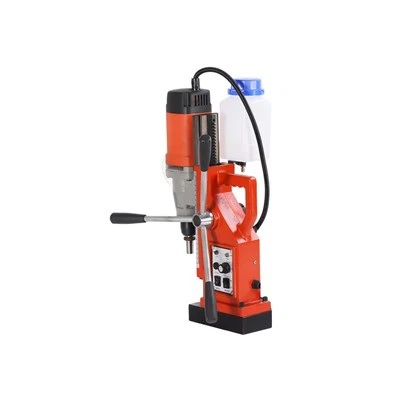
Milling and drilling are fundamental processes in the manufacturing industry, yet they present a significant challenge: heat management. As a seasoned supplier in the milling and drilling domain, I’ve witnessed firsthand how excessive heat can compromise the quality of workpieces, reduce tool life, and even lead to safety hazards. In this blog, I’ll share some practical strategies to effectively manage heat in milling and drilling operations. Milling and Drilling
Understanding the Heat Generation Mechanism
Before delving into heat management strategies, it’s crucial to understand how heat is generated during milling and drilling. In milling, heat is primarily produced due to the friction between the cutting tool and the workpiece material, as well as the deformation of the workpiece material during the cutting process. Similarly, in drilling, the rotation of the drill bit against the workpiece creates friction, and the shearing of the material also contributes to heat generation.
The amount of heat generated depends on several factors, including the cutting speed, feed rate, depth of cut, tool geometry, and the properties of the workpiece material. For instance, harder materials generally require more energy to cut, resulting in higher heat generation. Likewise, increasing the cutting speed or feed rate can also lead to a significant rise in temperature.
The Impact of Excessive Heat
Excessive heat during milling and drilling can have several detrimental effects. Firstly, it can cause thermal expansion of the workpiece and the cutting tool. This expansion can lead to dimensional inaccuracies in the machined parts, reducing their quality and functionality. Moreover, the repeated heating and cooling cycles can induce thermal stresses in the workpiece, which may result in cracking or warping over time.
Secondly, high temperatures can significantly reduce the tool life. The heat can cause the cutting edges of the tool to become dull more quickly, leading to increased wear and tear. This not only requires more frequent tool changes, which can be costly and time-consuming, but also affects the surface finish of the machined parts.
Finally, excessive heat can pose a safety risk to the operators. The hot chips and workpieces can cause burns, and the high temperatures can also lead to the release of harmful fumes and vapors, especially when machining certain types of materials.
Heat Management Strategies
1. Use of Cutting Fluids
One of the most common and effective ways to manage heat in milling and drilling is the use of cutting fluids. Cutting fluids serve multiple purposes: they lubricate the cutting interface, reducing friction and heat generation; they cool the cutting tool and the workpiece, preventing overheating; and they help flush away the chips, which can also contribute to heat buildup.
There are several types of cutting fluids available, including water-based emulsions, synthetic fluids, and straight oils. Water-based emulsions are the most widely used due to their good cooling properties and relatively low cost. Synthetic fluids offer excellent lubrication and cooling performance, as well as resistance to bacteria and fungi. Straight oils provide superior lubrication but may have limited cooling capabilities and can be more difficult to clean.
When using cutting fluids, it’s important to ensure proper application. The fluid should be delivered directly to the cutting zone at an appropriate flow rate. This can typically be achieved through flood cooling, where the fluid is sprayed over the entire cutting area, or through high-pressure coolant systems, which can penetrate deep into the cutting interface.
2. Optimal Cutting Parameters
Another key strategy for heat management is to optimize the cutting parameters. The cutting speed, feed rate, and depth of cut all have a significant impact on heat generation. By carefully selecting these parameters, it’s possible to minimize the amount of heat produced while maintaining an acceptable level of productivity.
In general, reducing the cutting speed can help reduce heat generation, as it decreases the friction between the tool and the workpiece. However, this may also result in longer machining times. Therefore, a balance needs to be struck between cutting speed and productivity. Similarly, adjusting the feed rate and depth of cut can also help manage heat. A lower feed rate and shallower depth of cut can reduce the power required for cutting, thereby reducing heat generation.
To determine the optimal cutting parameters, it’s important to consider the properties of the workpiece material, the type of cutting tool, and the specific machining operation. Manufacturers often provide recommended cutting parameters for their tools, which can serve as a starting point. However, these parameters may need to be adjusted based on the actual machining conditions.
3. Tool Selection and Design
The choice of cutting tool can also have a significant impact on heat management. Tools with sharp cutting edges and proper geometry can reduce the cutting forces and friction, thereby minimizing heat generation. For example, tools with a positive rake angle can help reduce the cutting forces and improve chip flow, which can in turn reduce heat.
In addition, the material of the cutting tool is also important. High-speed steel (HSS) tools are commonly used for general-purpose milling and drilling, but they may not be suitable for high-speed machining or machining of hard materials due to their limited heat resistance. Carbide tools, on the other hand, offer excellent heat resistance and can withstand higher cutting speeds and temperatures. Coated tools, such as those with a titanium nitride (TiN) or titanium aluminum nitride (TiAlN) coating, can further improve the tool’s performance by reducing friction and increasing wear resistance.
Furthermore, the design of the tool can also play a role in heat management. For instance, tools with internal coolant channels can deliver the cutting fluid directly to the cutting edge, providing better cooling and lubrication.
4. Workpiece Preheating or Cooling
In some cases, preheating or cooling the workpiece can be an effective way to manage heat. Preheating the workpiece can reduce the cutting forces and improve the machinability of certain materials, especially those that are hard or brittle. However, this method needs to be carefully controlled to avoid overheating and thermal damage to the workpiece.
On the other hand, cooling the workpiece can help dissipate heat and reduce the temperature of the cutting zone. This can be achieved through various methods, such as using a chilled coolant or placing the workpiece in a cooling fixture. Cooling the workpiece can be particularly beneficial when machining materials with low thermal conductivity, as it can prevent heat from accumulating in the cutting area.
5. Machine Tool Maintenance
Proper maintenance of the machine tool is also essential for heat management. A well-maintained machine can operate more efficiently, reducing the power consumption and heat generation. Regularly checking and adjusting the machine’s alignment, lubrication, and cooling systems can ensure that it is running at its optimal performance.
In addition, keeping the machine clean and free of debris can also help prevent heat buildup. Chips and coolant residue can accumulate on the machine components, reducing their heat dissipation capabilities. Therefore, it’s important to clean the machine regularly and ensure that the coolant filtration system is working properly.
Conclusion

Managing heat in milling and drilling operations is a complex but essential task. By understanding the heat generation mechanism, recognizing the impact of excessive heat, and implementing the appropriate heat management strategies, manufacturers can improve the quality of their products, extend the tool life, and enhance the safety of their operations.
Benchtop Metal Lathe As a trusted supplier of milling and drilling products, I’m committed to providing high-quality tools and solutions that can help you effectively manage heat in your machining processes. Whether you need advice on tool selection, cutting parameters, or heat management strategies, I’m here to assist you. If you’re interested in learning more about our products or have any questions regarding heat management in milling and drilling, please don’t hesitate to contact me for a procurement discussion.
References
- Trent, E. M., & Wright, P. K. (2000). Metal Cutting. Butterworth-Heinemann.
- Shaw, M. C. (2005). Metal Cutting Principles. Oxford University Press.
- Astakhov, V. P. (2010). Metal Cutting Mechanics. CRC Press.
YS Machine Tools Co., Ltd.
We’re well-known as one of the leading milling and drilling suppliers in China, featured by quality products and good service. Please rest assured to buy customized milling and drilling at competitive price from our factory. Contact us for more details.
Address: 300 Sandusky st, Ohio, 43611, USA
E-mail: yishoumachinetools@gmail.com
WebSite: https://www.ysmachinetool.com/
