As a supplier of acoustic operable partitions, I often encounter questions from clients about the Sound Transmission Class (STC). In this blog post, I’ll delve into what STC is, why it’s crucial for acoustic operable partitions, and how it impacts the performance of these partitions in various settings. Acoustic Operable Partitions

Understanding Sound Transmission Class (STC)
The Sound Transmission Class is a single – number rating that represents the effectiveness of a partition or building component in reducing sound transmission. It is a standardized measure that allows architects, engineers, and specifiers to compare the acoustic performance of different materials and products easily.
The STC rating is determined through laboratory testing according to ASTM E90 (Standard Test Method for Laboratory Measurement of Airborne Sound Transmission Loss of Building Partitions and Elements). During the test, a wall or partition is installed between two adjacent chambers. A sound source is placed in one chamber, and the sound levels are measured on both sides of the partition. The sound transmission loss (TL) is calculated at various frequencies, typically from 125 Hz to 4000 Hz.
The resulting TL values at different frequencies are then plotted on a graph, and the STC rating is derived by comparing this curve to a reference contour. The STC rating is essentially the number on the reference contour that best fits the measured data over the frequency range. A higher STC rating indicates better sound – insulating properties.
Why STC Matters for Acoustic Operable Partitions
Acoustic operable partitions are used in a wide range of applications, from corporate offices and educational institutions to hotels and convention centers. In each of these settings, the ability to control noise is of utmost importance.
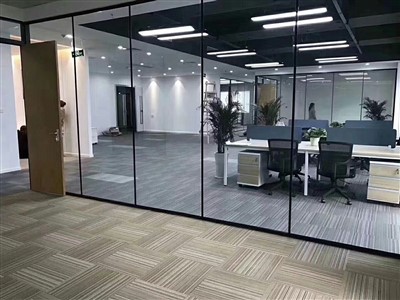
In an office environment, for example, open – plan workspaces are becoming increasingly popular. Acoustic operable partitions can be used to create private meeting rooms or quiet zones. A partition with a high STC rating will prevent the sound from conversations in the meeting room from leaking into the open workspace, and vice versa. This not only enhances privacy but also improves the overall productivity of the employees by reducing distractions.
In educational institutions, classrooms may need to be reconfigured for different teaching methods or events. Acoustic operable partitions with a sufficient STC rating can ensure that the noise from adjacent classrooms does not interfere with the learning environment. Students can focus better on their studies, and teachers can deliver their lessons without being disrupted by external noise.
For hotels and convention centers, acoustic operable partitions are used to divide large event spaces into smaller, more intimate rooms. A high – STC partition will help to create separate acoustic environments for different events, such as weddings, business conferences, and seminars. This allows multiple events to take place simultaneously without disturbing each other.
Factors Affecting the STC of Acoustic Operable Partitions
Several factors can influence the STC rating of acoustic operable partitions.
Material Composition: The materials used in the construction of the partition play a significant role in its acoustic performance. Dense materials, such as gypsum board, heavy – gauge steel, and acoustic insulation, tend to have better sound – insulating properties. For example, a partition made with multiple layers of gypsum board and a core filled with acoustic insulation will generally have a higher STC rating than a single – layer partition made of a lightweight material.
Sealing and Gaskets: Proper sealing is crucial for achieving a high STC rating. Even small gaps or leaks in the partition can significantly reduce its sound – insulating performance. High – quality gaskets and seals are used around the edges of the partition, as well as at the joints and corners. These seals prevent sound from bypassing the partition through air gaps.
Partition Design and Construction: The design and construction details of the partition can also affect its STC. For instance, a partition with a staggered stud construction can break the sound path and improve the acoustic performance. Additionally, the height and width of the partition, as well as the way it is installed (e.g., whether it is floor – to – ceiling or suspended), can impact the STC rating.
STC Ratings in Different Applications
The required STC rating for acoustic operable partitions depends on the specific application and the noise levels in the surrounding environment.
Low – noise environments: In areas where the noise levels are relatively low, such as private offices or small meeting rooms in a quiet building, an STC rating of around 35 – 40 may be sufficient. This level of acoustic performance can provide a reasonable amount of privacy and reduce the impact of normal conversation noise.
Medium – noise environments: For classrooms, open – plan offices with moderate noise levels, and small hotel meeting rooms, an STC rating of 40 – 50 is often recommended. This higher rating can effectively block out more significant noise sources, such as voices, office equipment, and general background noise.
High – noise environments: In large convention centers, auditoriums, or areas near high – traffic areas, an STC rating of 50 or higher is typically required. These partitions need to provide excellent sound insulation to prevent the transmission of loud noise, such as applause, music, or the sound of large crowds.
How Our Acoustic Operable Partitions Excel in STC Performance
As a supplier of acoustic operable partitions, we are committed to providing products with superior STC ratings. Our partitions are manufactured using high – quality materials, including thick gypsum board, heavy – duty steel frames, and dense acoustic insulation. This combination of materials helps to block sound effectively and achieve high STC ratings.
We pay close attention to the design and construction details of our partitions. Our partitions feature advanced sealing systems with specialized gaskets that ensure a tight fit and prevent sound leakage. The frames are engineered to provide structural integrity and enhance the overall acoustic performance.
We also offer a range of customization options to meet the specific STC requirements of different projects. Whether you need a partition with a standard STC rating for a small office or a high – end partition with an extremely high STC for a large convention center, we can work with you to develop a solution that fits your needs.
Conclusion
The Sound Transmission Class is a vital factor to consider when choosing acoustic operable partitions. It provides a reliable measure of the partition’s ability to reduce sound transmission and create separate acoustic environments. By understanding the importance of STC, the factors that affect it, and the required STC ratings for different applications, you can make an informed decision when selecting acoustic operable partitions for your project.
Office Glass Partitions If you are in the market for high – quality acoustic operable partitions and want to learn more about our products’ STC performance, we encourage you to contact us. Our team of experts is ready to discuss your project requirements, provide detailed product information, and assist you in selecting the best partition solution for your needs.
References
- ASTM E90 – 2018, Standard Test Method for Laboratory Measurement of Airborne Sound Transmission Loss of Building Partitions and Elements
- Architectural Acoustics: Principles and Practice by Michael J. Fisher
Dasheng Partition Building Materials Co., Ltd.
As one of the most professional acoustic operable partitions manufacturers and suppliers in China, we’re featured by quality products and good service. Please rest assured to buy customized acoustic operable partitions at competitive price from our factory.
Address: No. 41, West Line East Road, Shizigang Industrial Zone, Dashi Community, Lishui Town, Nanhai District, Foshan City, Guangdong Province, P.R. China
E-mail: dsmobilewall@gmail.com
WebSite: https://www.movablewall.net/
